

Air holds water, and warm air holds more
Water vapour is an invisible part of the air in every room. The warmer the air, the more vapour it can hold. Relative humidity expresses how full the air is compared with the maximum it could hold at that temperature: 50% relative humidity means the air is holding half of what it could. Because the maximum changes with temperature, the same amount of moisture gives a different relative humidity in a warm room and a cold one.
Dew point is the temperature that matters
Dew point is the temperature at which the air you have would become fully saturated. Cool any surface to that temperature and water condenses on it. A room at 20°C and 60% relative humidity has a dew point of about 12°C, so any surface below 12°C in that room will be wet. Raise the humidity to 70% and the dew point rises to roughly 14.4°C, and more surfaces qualify.
Which is why surface temperature is half the answer
This is the part usually missed. A house can be at a perfectly reasonable humidity and still grow mould, because one surface — a cold reveal, an uninsulated lintel, the wall behind a wardrobe on a north elevation, a corner where two external walls meet — sits below dew point. That is why a proper assessment measures surface temperatures as well as the air.
What figures to aim for
In most occupied homes, keeping relative humidity roughly between 40% and 60% makes surface condensation much less likely, provided the coldest surfaces are not unusually cold. Below 40% and the air feels dry; persistently above 65% and mould growth becomes likely on any cool surface. A cheap digital hygrometer in the affected room will tell you a great deal over a week.
Three ways to change the outcome
Reduce the moisture going into the air: cover pans, run the extract during and after cooking and showering, vent the tumble dryer outside, and dry washing where the moisture can leave. Increase air change so moist air is replaced. And raise the temperature of the cold surfaces, through heating patterns, insulation or removing what traps cold air against them. Any one helps; together they settle it.
When to get it measured properly
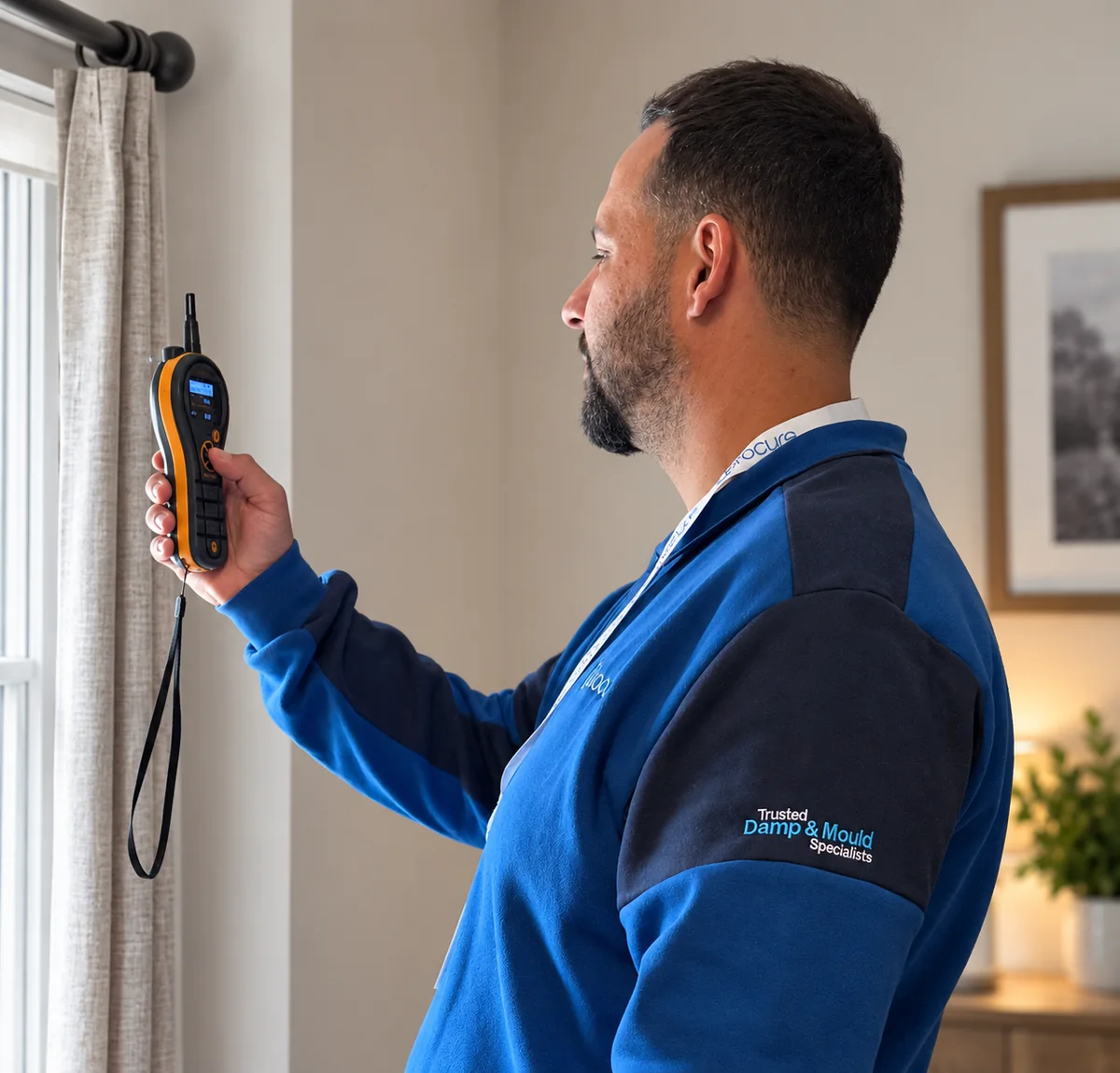
If mould keeps returning to the same place, if condensation runs down windows every morning, or if you have been told to "ventilate more" without anybody measuring anything, a condensation assessment will give you figures instead of opinions: humidity and dew point room by room, surface temperatures on the affected construction, and a plan in priority order.
Limitations of general guidance
This article is general guidance. It cannot confirm the cause of dampness in a specific property. Recommendations should follow an inspection of the building, its external environment and its internal conditions.
Book an inspection