
Mould & condensation
Professional mould remediation & mould removal
Treating the mould is only part of the solution. We investigate why it developed in the first place, then remediate the contamination and control the conditions that caused it.
Accredited & certified
PCA Qualified Technician (PCAQT) — Damp & Timber
Our qualified technicians install damp proofing and timber preservation treatments with care and attention to detail.

CHAS Accredited Contractor
Assessed and accredited for health and safety management, so landlords, agents and homeowners can see our safe working practices have been independently checked.

UK Academy of Mould Experts Accredited
Corporate member of UKAME, working to recognised industry standards for the safe assessment and remediation of mould in domestic property.

Dewpoint Professional Certified
Certified in Advanced Mould Remediation, covering containment, safe removal and correcting the moisture conditions that allow mould to return.
Investigation-led remediation
Mould that keeps coming back?
Recurring mould usually indicates that the conditions supporting fungal growth have not been adequately controlled. Mould needs moisture, and until the source of that moisture is identified and managed, growth tends to return to the same surfaces.
Possible contributing factors include:
Excessive indoor relative humidity
Surface condensation
Inadequate extract ventilation
Insufficient background ventilation
Cold external walls
Thermal bridging
Inadequate or discontinuous insulation
Water penetration
Plumbing leaks
Persistent building-fabric moisture
Poor air circulation
Cleaning or decorating over mould may improve its appearance temporarily, but it does not necessarily address the underlying moisture mechanism. Anti-mould paint applied over a cold, wet surface is still a cold, wet surface.
We therefore work in a set order: identify the moisture source, control the contributing conditions, remediate the contamination, and reduce the risk of recurrence.
What the issue is
Procure Group provides professional mould remediation, decontamination and moisture-management services for homeowners, landlords, letting agents and property managers. Our approach goes beyond spraying or wiping away visible mould: we assess the extent of contamination, investigate the moisture conditions supporting the growth and provide a proportionate remediation strategy designed around the property. Mould grows where surfaces stay damp for long enough, so remediation means removing the growth safely, treating the affected surfaces and correcting the conditions that allowed it to develop.
Common symptoms
- Black, green or grey speckled growth
- Mould around window reveals and in corners
- Growth behind furniture or in wardrobes
- Musty odour
- Repeated return after cleaning
Likely contributing factors
- Persistent surface condensation
- Cold surfaces and cold bridging
- Restricted air movement
- An unresolved leak or penetrating damp
- Poor extract ventilation
Conditions that may be mistaken for it
- Surface soiling or staining
- Efflorescent salts
- Historic mould that is no longer active
How the issue should be investigated
- Identify the extent and locations of growth
- Establish the moisture source
- Record humidity and surface temperatures
- Assess ventilation performance
- Consider occupant vulnerability
Potential treatment or repair options
- Controlled cleaning and removal of affected finishes where necessary
- HEPA vacuuming of affected surfaces
- Professional fungicidal and antimicrobial treatment
- ULV or thermal fogging where the extent of contamination justifies it
- Ventilation, insulation or heating improvements to control the conditions
- Redecoration with specialist primers and mould-resistant finishes
When treatment may not be appropriate
- Where a small area can be cleaned and the cause simply corrected
- Where extensive treatment is proposed without addressing moisture
Factors affecting the cost
- Area affected and number of rooms
- Whether finishes must be removed
- Containment and protection required
- Ventilation works carried out alongside
What to expect during an inspection
The surveyor will assess the growth, take readings and discuss the likely moisture source before recommending a proportionate scope.
How we work
Our mould remediation process
Not every property needs every stage. The scope follows the evidence: the extent of contamination, the materials affected and the moisture conditions found during the assessment.
- 1
Assessment
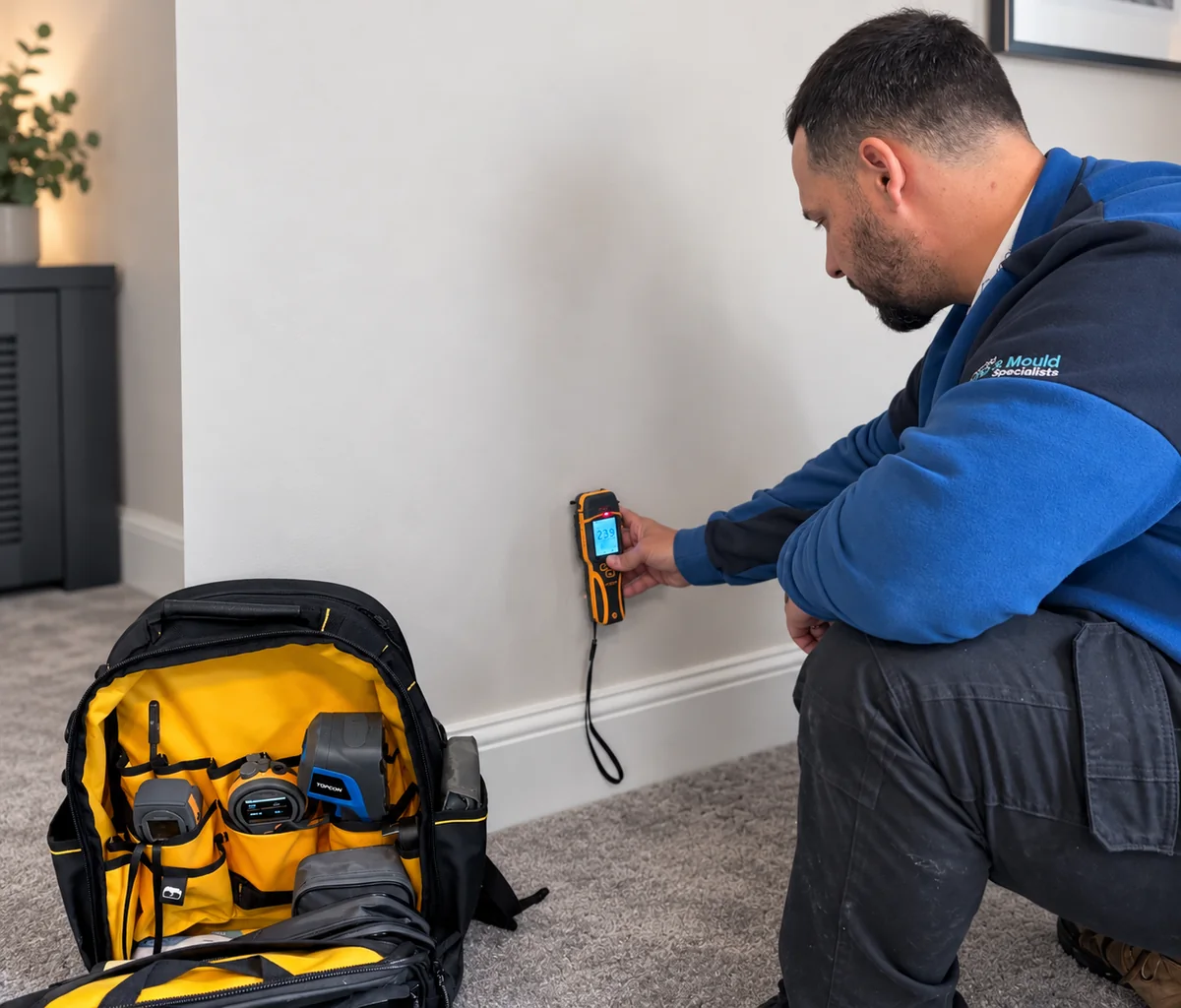
We establish the extent and distribution of mould contamination and investigate the conditions contributing to its development.
- Visual inspection
- Moisture profiling
- Relative humidity and air-temperature measurements
- Surface-temperature assessment
- Dew-point and condensation-risk assessment
- Ventilation assessment
- Thermal imaging where appropriate
- Building-fabric assessment
- Investigation for penetrating damp or plumbing-related moisture
- 2
Identify the cause
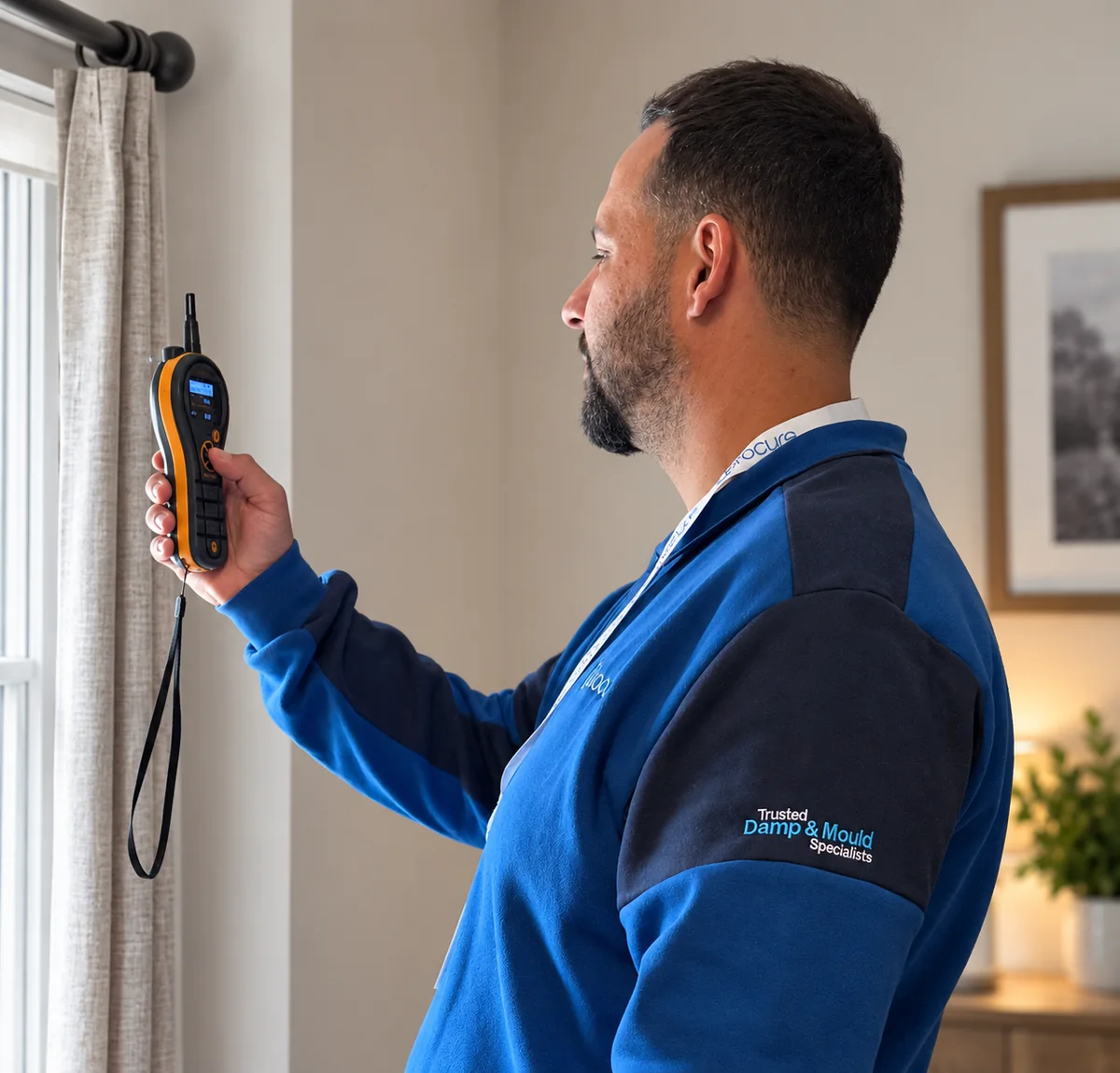
We distinguish between the mould itself and the moisture mechanism allowing it to grow. Recommendations are based on the evidence identified during the assessment rather than assuming every mould problem has the same cause or needs the same treatment.
- 3
Contamination control
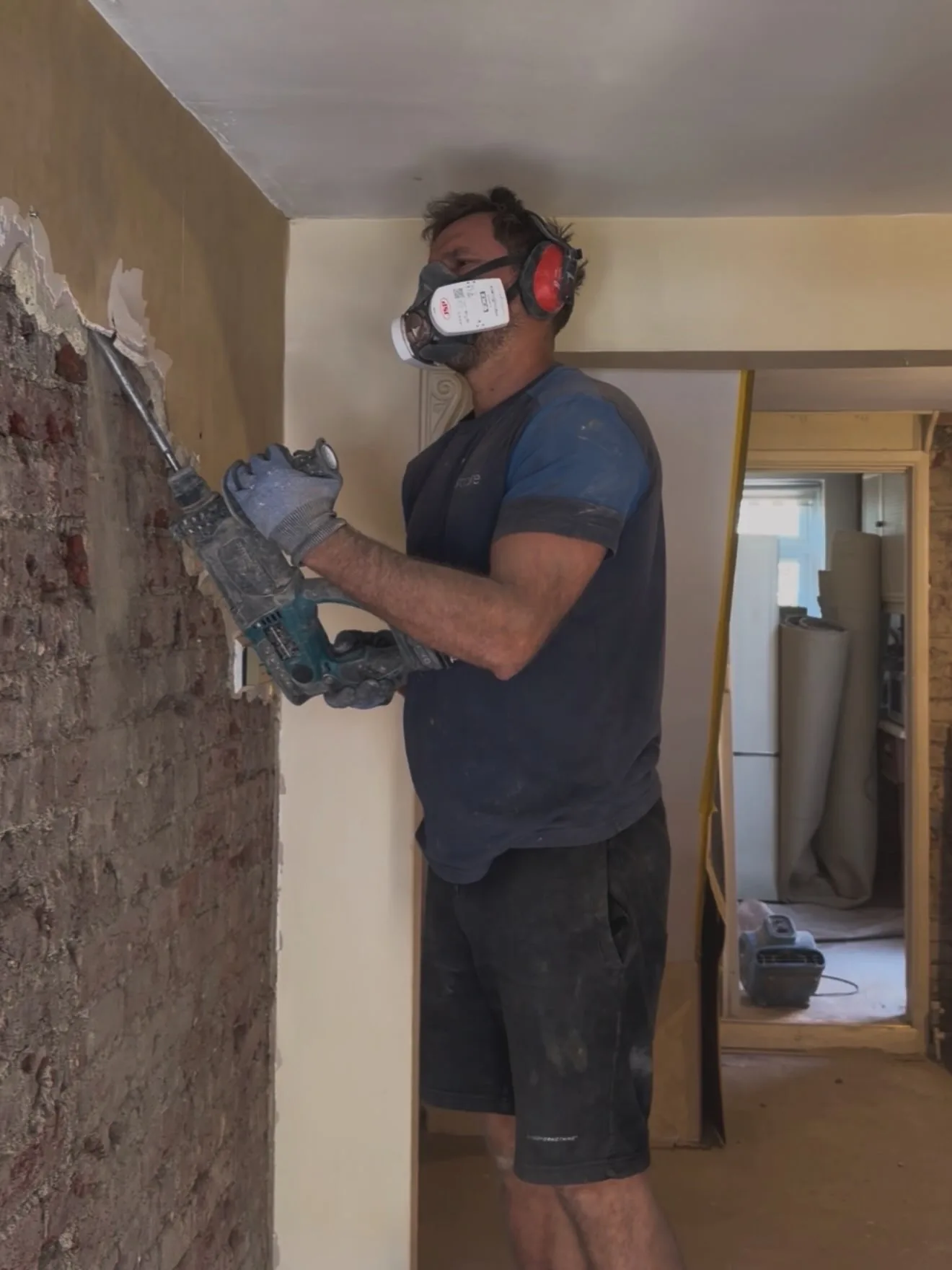
On more extensive remediation projects, appropriate controls can be introduced to limit the unnecessary spread of disturbed particulate contamination into unaffected areas. Depending on the scope of works this may include controlled working areas, HEPA filtration and air-management equipment.
- 4
Professional mould remediation
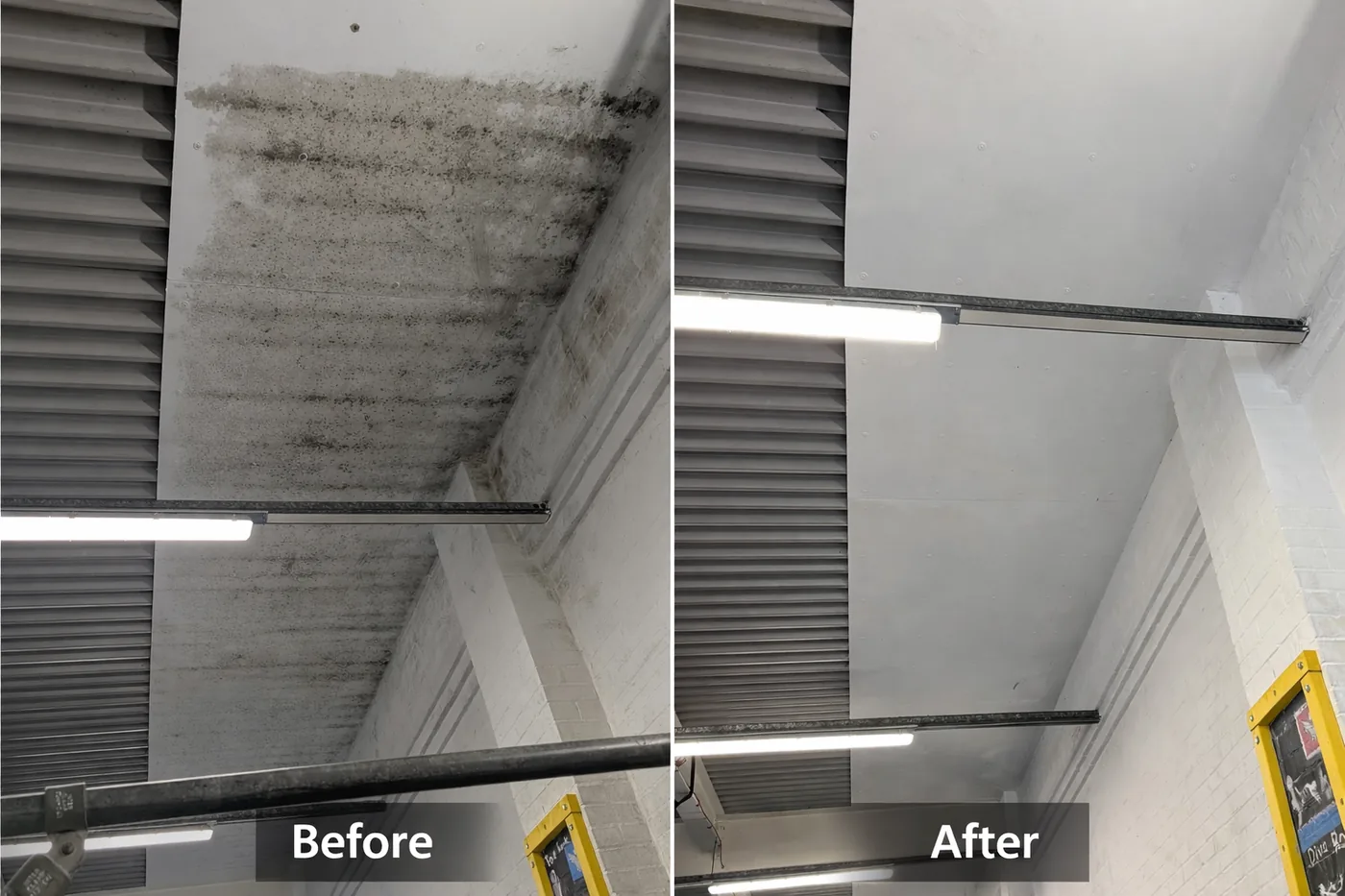
The physical work of removing and treating the contamination. What is appropriate depends on the surfaces involved and how deeply the growth has established itself.
- Controlled removal of visible mould contamination
- HEPA vacuuming
- Professional fungicidal cleaning
- Antimicrobial surface treatment
- Removal of heavily contaminated porous materials where they cannot reasonably be remediated
- Cleaning and treatment of affected substrates
- 5
Airborne and hard-to-reach decontamination
Where justified by the extent and nature of the contamination, professional ULV or thermal fogging can be incorporated as a supplementary decontamination measure, reaching airborne spores and surfaces that cannot practically be cleaned by hand.
Fogging is a supplement, not a substitute. It does not replace the physical removal of visible mould, and it does not correct the moisture source. - 6
Moisture and condensation control
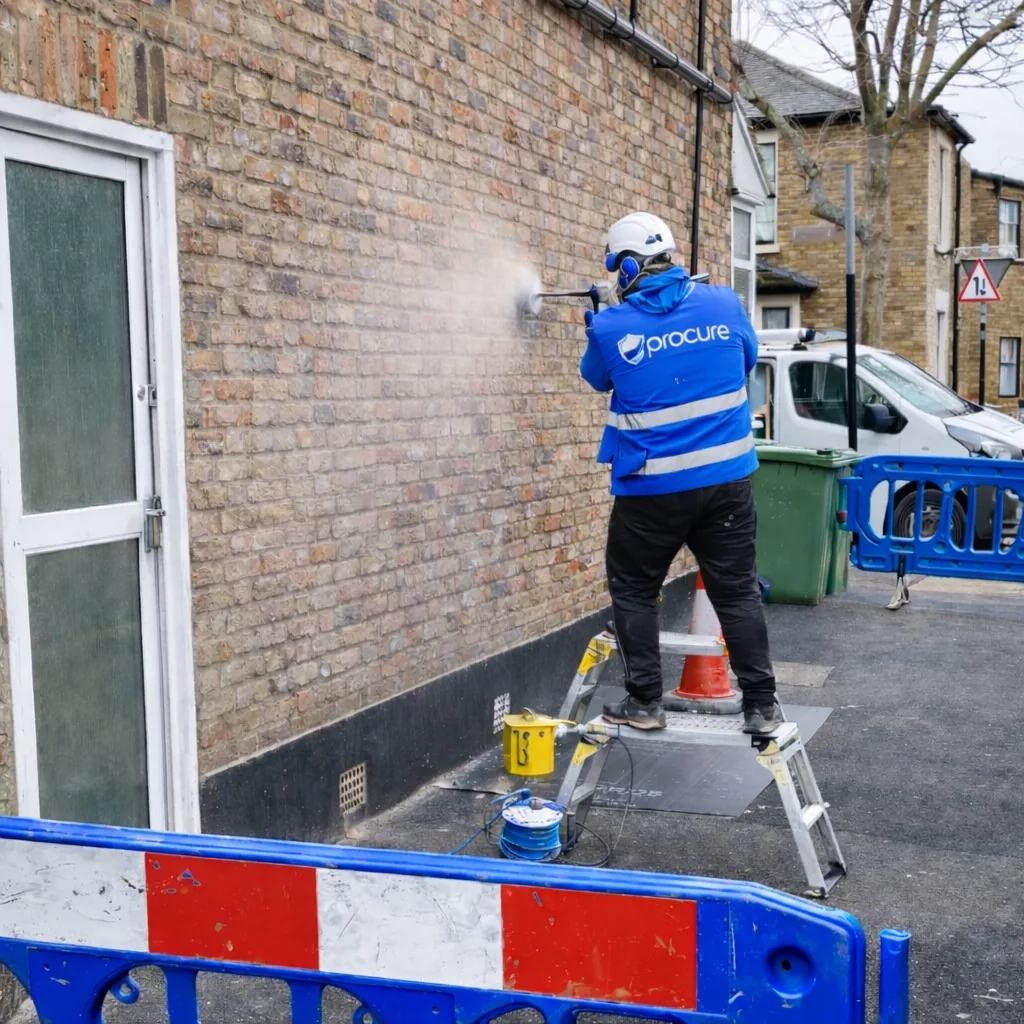
Where condensation or elevated humidity is contributing to the problem, we can specify and install appropriate measures. What is recommended is property-specific: ventilation equipment is not the automatic answer to every case of mould.
- Positive Input Ventilation (PIV)
- Extract ventilation upgrades
- Continuous-running extract ventilation
- Background ventilation improvements
- Mechanical ventilation with heat recovery (MVHR) where appropriate
- Internal thermal improvements where justified
- Measures to reduce problematic cold surfaces and thermal bridging
- 7
Reinstatement and surface protection
Where included within the agreed works, treated areas are made good so the room is returned to a finished condition rather than left as bare treated substrate.
- Specialist primers
- Mould-resistant coatings
- Anti-mould paints
- Replacement of contaminated sealants
- Re-decoration of treated walls and ceilings
- Reinstatement following localised removal of contaminated materials
Proportionate scope
Two levels of mould treatment
Which level is appropriate depends on the extent of contamination, the condition of the materials affected and the underlying moisture conditions. Most properties do not need the full remediation process.
Targeted mould treatment
For localised or relatively superficial contamination, where extensive containment and material removal are not justified.
- Professional surface cleaning
- HEPA vacuuming
- Fungicidal treatment
- Antimicrobial treatment
- Localised decontamination
- Surface protection
- Advice for controlling the underlying moisture conditions
Suitable where the affected materials are sound and the moisture source can be corrected straightforwardly.
Full mould remediation
For established, recurring or more extensive contamination requiring a controlled remediation process.
- Defined work and containment areas
- HEPA-filtered air management
- Controlled removal of contamination
- HEPA vacuuming
- Fungicidal and antimicrobial treatment
- Removal of unsuitable contaminated materials where necessary
- ULV or thermal fogging where appropriate
- Ventilation or moisture-management improvements
- Reinstatement
- Post-treatment documentation
Specified where contamination is widespread, materials are no longer salvageable, or growth has repeatedly returned.
Scope and price are confirmed after the assessment, so the work quoted reflects what the property actually needs.
Decontamination
Mould fogging and decontamination
We can provide professional ULV and thermal fogging as part of an appropriate remediation programme. Fogging disperses a fine mist of treatment through the air of a room, which allows it to reach airborne spores and settle on surfaces that are difficult to clean by hand, such as behind fixed units, within voids and across complex ceiling details.
Used in the right circumstances it is a useful supplementary measure. Used on its own it is not a cure.
- Treats airborne contamination as well as surfaces
- Reaches areas that cannot practically be cleaned by hand
- Applied as part of a specified remediation programme, after physical removal
- Followed by moisture-control measures where conditions require them
Moisture management
Condensation, humidity and ventilation
Many mould cases are associated with condensation, but mould should not automatically be diagnosed as a ventilation problem. A leak, a bridged cavity, defective rainwater goods or rising moisture can all produce growth that looks identical on the surface.
Before recommending ventilation or thermal work, we assess:
- Indoor relative humidity
- Internal temperature
- Surface temperatures
- Dew point
- Extract ventilation
- Background ventilation
- Air movement
- Cold bridging
- Insulation
- Occupancy-generated moisture
- Evidence of other damp mechanisms
Rented property
Mould remediation for landlords and property managers
We provide inspection, diagnosis, remediation and documentation for rented residential property, whether you manage one property or a portfolio.
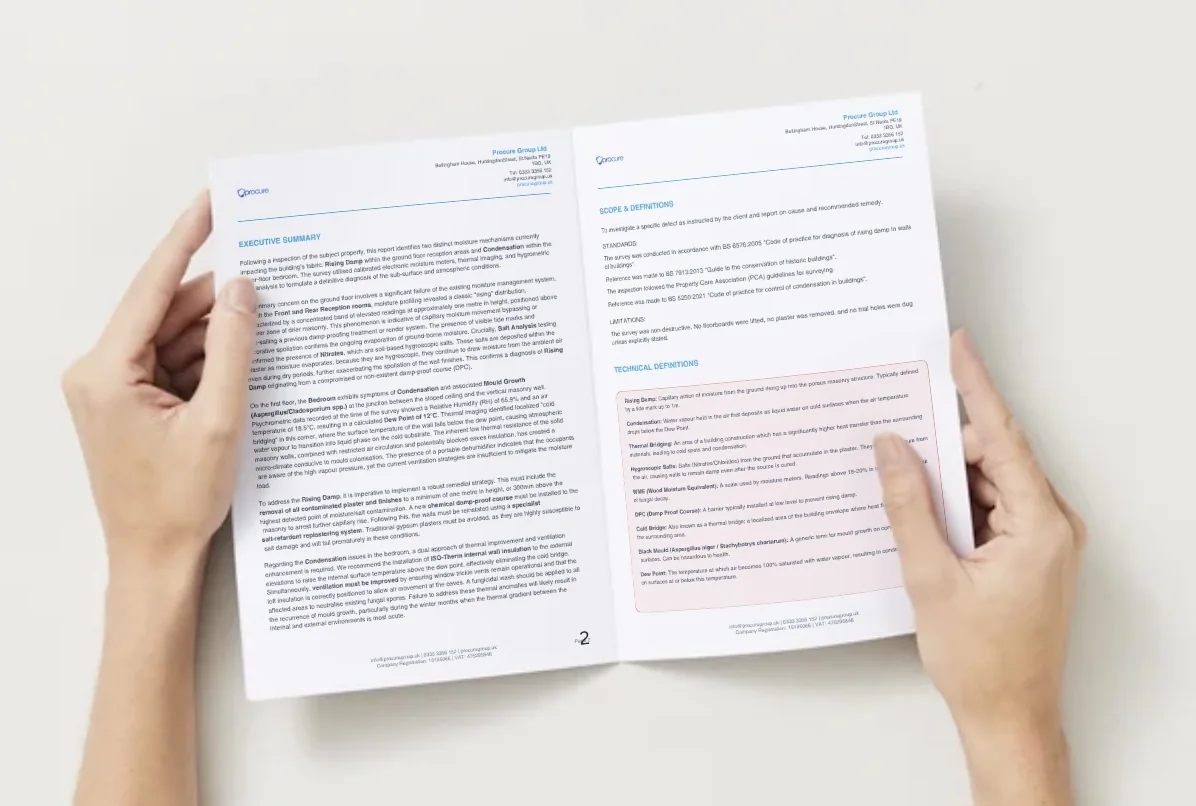
Damp and mould in rented housing is assessed on the facts of the individual property. Our role is to establish what is actually causing the growth, record it properly and set out what needs doing, so decisions can be made on evidence rather than on assumptions about how the property is being occupied.
- Evidence-led investigation of the moisture mechanism
- Photographic documentation of the findings
- Clear, proportionate recommendations
- Professional mould remediation
- Ventilation improvements where the assessment supports them
- Reinstatement where included in the agreed works
- Treatment records and aftercare information for your files
The difference
Why professional remediation is different from cleaning
Both have their place. The distinction matters when growth has become established, when porous materials are affected, or when the same patch keeps returning.
Basic mould cleaning
Deals primarily with visible surface contamination.
- Treats what can be seen on the surface
- No assessment of how far contamination extends
- Affected porous materials usually left in place
- No control of disturbed particulate contamination
- Moisture source generally not investigated
- Often improves appearance only until conditions recur
Professional mould remediation
Considers the contamination, the materials, the air and the cause together.
- Extent and distribution of contamination established
- Condition of affected materials assessed
- Moisture source investigated and addressed
- Containment and air management where the scope requires it
- Defined cleaning, removal and treatment methodology
- Unsalvageable materials removed rather than treated in place
- Environmental conditions controlled to reduce recurrence
- Work documented for the property record
The objective is not simply to make a wall look clean. It is to deal with the contamination appropriately and reduce the conditions that allowed it to develop.
Why Procure Group
A mould specialist, not a cleaning contractor
Cause before treatment
We investigate the moisture mechanism before recommending remedial work, because treatment applied to an uncorrected cause is temporary by definition.
Professional remediation equipment
HEPA filtration, professional vacuuming, air-management and specialist decontamination equipment, available where the remediation specification requires it.
Damp and mould expertise
Because we specialise in damp, condensation, ventilation and property preservation, we can investigate the building conditions behind recurring mould rather than treating it purely as a cleaning problem.
A complete solution
Investigation, moisture control, remediation, ventilation or thermal improvements where required, reinstatement and aftercare, handled by one company.
Proportionate recommendations
Not every mould problem requires full containment, fogging or major building work. The scope should reflect the evidence and the extent of contamination.
Accredited and certified
Corporate member of the UK Academy of Mould Experts and certified in Advanced Mould Remediation through Dewpoint Professional.
Areas we cover
Mould remediation across Bedfordshire, Cambridgeshire and Northamptonshire
We carry out mould assessments and remediation throughout Bedfordshire, Cambridgeshire and Northamptonshire, together with Hertfordshire, Milton Keynes and Peterborough. If a postcode falls outside the area we cover, we will say so rather than take the enquiry.
Related work
Investigations and works that sit alongside mould remediation
Specialist damp surveys
A full written assessment of the moisture conditions in the property, with findings and recommendations you can act on.
Condensation control
Humidity, ventilation and surface temperature measures where condensation is driving the growth.
Damp investigations
Where the moisture source is not obvious and needs establishing before any treatment is specified.
Penetrating damp investigations
Rainwater ingress, defective pointing, bridged cavities and failed rainwater goods that keep a wall wet.
Internal wall insulation
Thermal improvement to cold internal surfaces where condensation risk is driven by surface temperature.
Damp-resistant plastering
Reinstatement of walls where finishes have had to be removed as part of the remediation.
0% INTEREST. NO FEES.
Spread the cost of your remedial works.
Pay 40% upfront and spread the balance over three or six monthly instalments.
Available on eligible remedial works, subject to assessment and written agreement.
Frequently asked questions
Stop treating the stain. Find out why the mould is there.
Whether you are dealing with a small recurring patch or extensive mould contamination, we can investigate the moisture source, recommend proportionate corrective measures and carry out professional remediation where required.