

Start outside, not inside
Most of what gets called rising damp is water arriving from somewhere obvious once you look for it. Walk the outside of the building in the rain if you can. Ground, paving or a raised border sitting above the damp-proof course; a downpipe discharging at the base of a wall; a blocked gully; render cracked or carried down below ground level; pointing washed out on the weather elevation; a gutter overflowing at a joint. Any of those will produce a wet wall internally, and correcting them costs a fraction of a remedial specification.
Separate condensation from moisture in the fabric
Damp high on a wall, in corners, behind furniture, on cold reveals or as black spot mould around windows is usually condensation rather than water coming through the structure. It responds to heating, air change and surface temperature, not to injection or tanking. Where a property is tenanted this matters twice over, because the fix is partly about the building and partly about how the rooms are heated and ventilated, and a written account of both protects everyone.
Questions worth asking about the property's history
Has damp-proofing work been done before, and is there paperwork or a guarantee? Has the property stood empty or unheated? Have windows, insulation or a solid floor been installed without any change to airflow? Have there been leaks — a bath, a washing machine, a heating pipe in the floor? Was the wall replastered, and if so with what? History explains a surprising proportion of readings, particularly where salts were left in a wall that has since been decorated over.
When to commission a specialist investigation
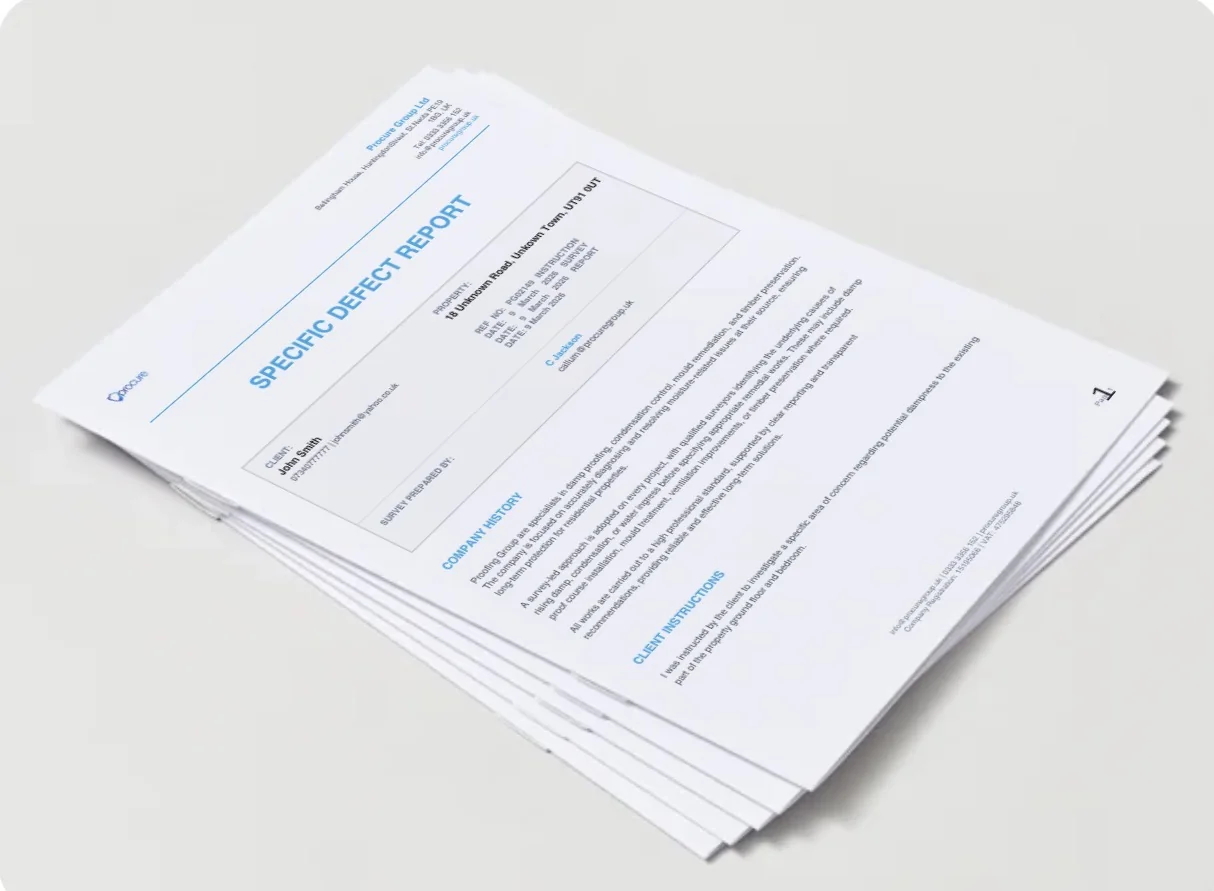
When a survey has recommended further investigation; when a contractor has quoted significant work without measuring anything; when damp has returned after previous remedial work; when mould keeps coming back in the same place; when timber decay is suspected; and when you need a written position for an insurer, a managing agent, a lender or a solicitor. Ask for a report with photographs, the readings, the reasoning and the limitations stated, in enough detail that another contractor could price from it.
Getting to a costed plan
Deal with the avoidable external water first and give the wall time to respond — masonry dries slowly, and a month of dry weather tells you more than a second opinion. Then price only the work the evidence supports, in priority order, with the drying and decoration sequenced realistically rather than promised for next week. Where remedial work is genuinely needed, ask for indicative costs in the report itself so the figure is not a surprise, and expect the report to say plainly what it could not see.
Limitations of general guidance
This article is general guidance. It cannot confirm the cause of dampness in a specific property. Recommendations should follow an inspection of the building, its external environment and its internal conditions.
Book an inspection