

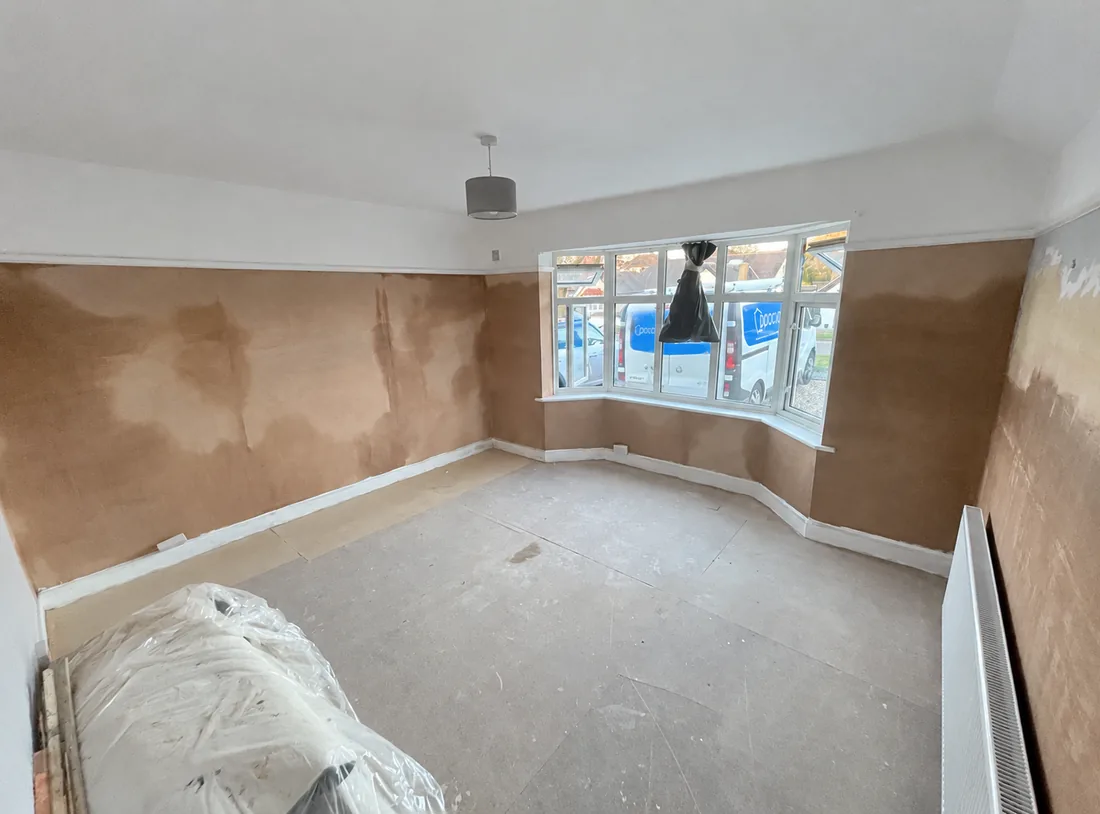
A pattern worth paying attention to
If a patch darkens or spreads within a day or two of heavy rain and fades during dry spells, that correlation is one of the most useful pieces of evidence a homeowner can offer. It points towards water entering through the building fabric rather than moisture rising from the ground or condensing out of the air, and it narrows an investigation considerably.
Why it is not proof on its own
Wet weather brings more than rain. It brings lower temperatures, colder wall surfaces, higher external humidity and windows that stay shut — all of which increase condensation. So a rain-correlated patch still needs the internal environment measured before anybody concludes. What the pattern does is tell a surveyor to concentrate on the outside of the building, ideally in the weather that produces the problem.
Wind-driven rain is the real test
Vertical rain lands on roofs and paving. Rain driven at 40mph against an exposed elevation is forced into every crack, open perpend, failed sealant joint and hairline render defect on that face. That is why damp often appears on one elevation only, and why the elevation facing the prevailing weather — generally south-westerly in our area — is the one to inspect first.
The defects that produce it
In rough order of how often we find them: blocked, split or overflowing gutters; leaking downpipe joints and discharge at the wall base; eroded or cracked pointing; cracked, hollow or debonded render; spalled and porous brickwork; failed sealant and missing drips at window cills; slipped tiles and defective flashings; cracked chimney flaunching; and bridged or missing cavity trays over openings.
What you can check safely
From the ground, watch the gutters while it is actually raining — that is when a blocked or split gutter shows itself. Look for staining or moss streaks down the wall beneath a joint. Check that downpipes discharge into a gully rather than onto the wall or paving. Note whether ground levels, paving or borders sit above the damp-proof course. Do not climb; photographs from ground level are enough for a surveyor to work with.
Photographs during the rain are gold
A patch that has dried by the time a surveyor attends is much harder to interpret. If you can photograph the wall during or immediately after heavy rain, and again after a dry week, you have documented the mechanism. Bring those photographs to the inspection: they frequently shorten the investigation and occasionally identify the defect outright.
Limitations of general guidance
This article is general guidance. It cannot confirm the cause of dampness in a specific property. Recommendations should follow an inspection of the building, its external environment and its internal conditions.
Book an inspection