
Holes are evidence of the past, not the present
Almost every property with original softwood joinery or roof timbers has some beetle flight holes, and in the great majority of cases the activity that made them ended decades ago. A flight hole is the exit an adult beetle made when it left the timber; it tells you that a beetle completed its life cycle at some point, not that the infestation continues. This matters because treatment is sold on the presence of holes far more often than on evidence of live activity. Establishing whether an infestation is current changes the answer from a whole-property spray to, frequently, no treatment at all.
Signs that suggest activity is live
Several indicators point to a current infestation rather than a historic one. Fresh bore dust, known as frass, that is pale, gritty and has accumulated recently below or around the holes, particularly if it reappears after the area is cleaned. Holes with sharp, clean, pale edges rather than darkened, dusty rims, and whose interiors show light-coloured wood. Dead adult beetles on nearby sills or window ledges in early summer, which is when most emerge. Damage in timber whose moisture content is elevated, because common furniture beetle in particular favours damp softwood. A single one of these is suggestive; two or three together make a strong case.
Which beetles actually matter
Common furniture beetle, Anobium punctatum, accounts for most infestations in British houses. Its holes are roughly 1 to 2mm across and its frass is gritty, and while it can weaken thin sections and sapwood it rarely threatens a substantial structural member on its own. House longhorn beetle is much more serious but is restricted to a limited area of the country and produces far larger oval holes. Deathwatch beetle attacks hardwood, typically old oak that has been damp, and leaves 3mm holes with bun-shaped frass; it is a concern in historic buildings. Wood-boring weevils are associated with already decayed, damp timber. Correct identification determines whether anything needs doing, and what.
Damp is usually the underlying condition
Most sustained beetle activity in a house is associated with timber that has been damp, because the larvae develop more successfully in wood with a raised moisture content. A treatment plan that ignores why the timber is damp is treating the wrong thing.
How a proper inspection assesses it
An inspection looks at the accessible timbers throughout the property rather than one room, records where holes are present and in what density, examines the condition of the holes and any frass, measures the moisture content of the affected timber, probes for loss of section and considers whether structural members are involved. Where the picture is ambiguous, the pragmatic approach is to clean the area, seal or mark it, and re-inspect after the emergence season to see whether fresh frass or new holes appear. That takes patience but it is far cheaper than treating a property unnecessarily, and it produces an answer rather than an assumption.
When treatment is justified, and what it involves
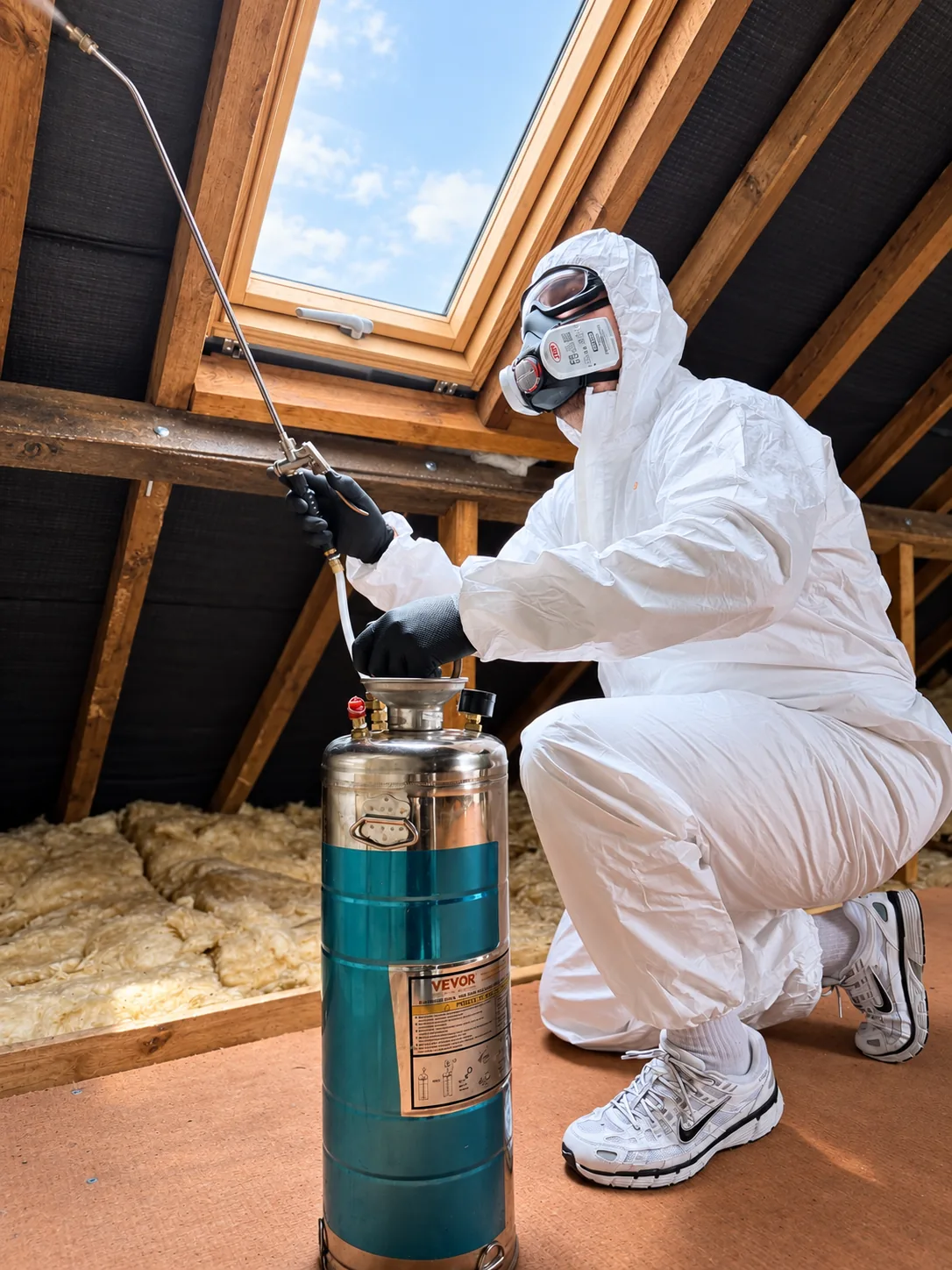
Where activity is live and the extent warrants it, treatment normally means applying an insecticidal formulation to the accessible surfaces of the affected timbers, usually as a spray or paste, after the timber has been prepared and any dust removed, together with correcting the moisture source so the conditions no longer suit the larvae. Structurally weakened members are strengthened or replaced. What is not usually justified is treating the entire property because a few historic holes were found in one location, or spraying before the damp problem that sustained the infestation has been addressed. Any treatment should be specified in writing, with the product, the areas treated and any guarantee stated.
Woodworm noted in a survey
What treatment does not cover, and living with old holes
Two practical points come up repeatedly. First, an insecticidal treatment protects the treated surfaces; it does not restore strength to timber that has already lost section, and it does nothing about the damp conditions that allowed the infestation to thrive. If a joist end has been weakened, it needs a structural repair regardless of any spray. Second, treatment does not remove the holes. Historic flight holes remain visible forever unless the timber is filled or replaced, so a future surveyor will see them and may well comment again.
Limitations of general guidance
This article is general guidance. It cannot confirm the cause of dampness in a specific property. Recommendations should follow an inspection of the building, its external environment and its internal conditions.
Book an inspection