

The coldest surface in the room
Mould does not choose windows because of the glass. It chooses them because the reveals, the frame junctions and the sill are usually the coldest surfaces in the room, and mould colonises whichever surface stays damp longest. A window opening interrupts the insulated part of the wall. In older solid walls the reveal is a thinner section of masonry; in cavity walls the reveal and lintel often form a cold bridge where the cavity is closed with dense material or where insulation stops short. Add a metal or older aluminium frame, or a plastic frame installed without insulated closers, and the temperature at that junction can be several degrees below the rest of the wall. Warm humid room air reaches it, cools, and gives up its moisture exactly there.
Why it starts in the corners
The pattern is nearly always the same: black spotting at the bottom corners of the reveal, along the sealant line, on the underside of the sill and on the frame rebate where the sash closes. Those are the places where air movement is lowest and the surface temperature drops furthest. Corners lose heat in two directions at once, so they run colder than flat surfaces, and any curtain, blind or piece of furniture that restricts air movement across them makes matters worse by keeping the surface cold and the local humidity high. Condensation on the glass itself is a useful warning sign rather than the problem: the glass is simply the first place you can see what the air in the room is doing.
What makes it worse
Several ordinary things push a room from occasional misting to persistent mould. Drying washing on a radiator under the window puts litres of water into the air within a few feet of the coldest surface in the house. Sleeping with the bedroom door closed and no heating raises humidity while the surfaces cool overnight. Trickle vents taped over or painted shut remove the small amount of background airflow the windows were designed to provide. Heavy lined curtains drawn against a cold reveal hold the surface colder still. Extract fans that are never run, or that are ducted into a loft rather than outside, allow bathroom and kitchen moisture to migrate through the house and settle in the coolest bedroom.
What it is not
Mould around windows is very rarely a sign of rising damp, and injecting a damp-proof course will have no effect on it. It is not usually a leak either, although a genuine leak should be excluded: water entering around a window is normally associated with staining that follows heavy rain, damp that extends onto the wall away from the frame, and decayed sealant or a defective sill throw. Nor is it a sign of a faulty window in itself. Modern sealed units are far better insulated than what they replaced, but they also stopped the unintended draughts that used to carry moisture away, so a house can become measurably damper after new windows are fitted even though the windows are performing exactly as designed.
Measures that make a measurable difference
Deal with moisture at source first. Use an effective extract fan in the kitchen and bathroom, with the door closed, and let it run for fifteen to twenty minutes after cooking or showering. Dry laundry outdoors when possible, or in one room with the door shut and extraction running, rather than on radiators around the house. Open trickle vents and keep them clear. Give the affected room a steady background temperature instead of short intense bursts, because it is the surface temperature that decides whether condensation forms. Leave a gap between furniture and external walls, and avoid drawing curtains tight against a cold reveal in the coldest weather.
When the fabric needs attention
If the measures above do not clear it, the reveal itself is probably too cold, and that is a fabric issue. Insulated cavity closers, a properly detailed and insulated reveal, replacing a thermally poor frame, or a thin insulated lining to the reveal and window head can raise the surface temperature enough to stop condensation forming. In some properties the answer is a continuously running low-volume extract system so that humidity never reaches the level at which those surfaces matter. Any of these is a design decision rather than a product purchase, and it should follow measurement of the actual humidity and surface temperatures in the affected rooms.
Cleaning it safely, and what to expect afterwards
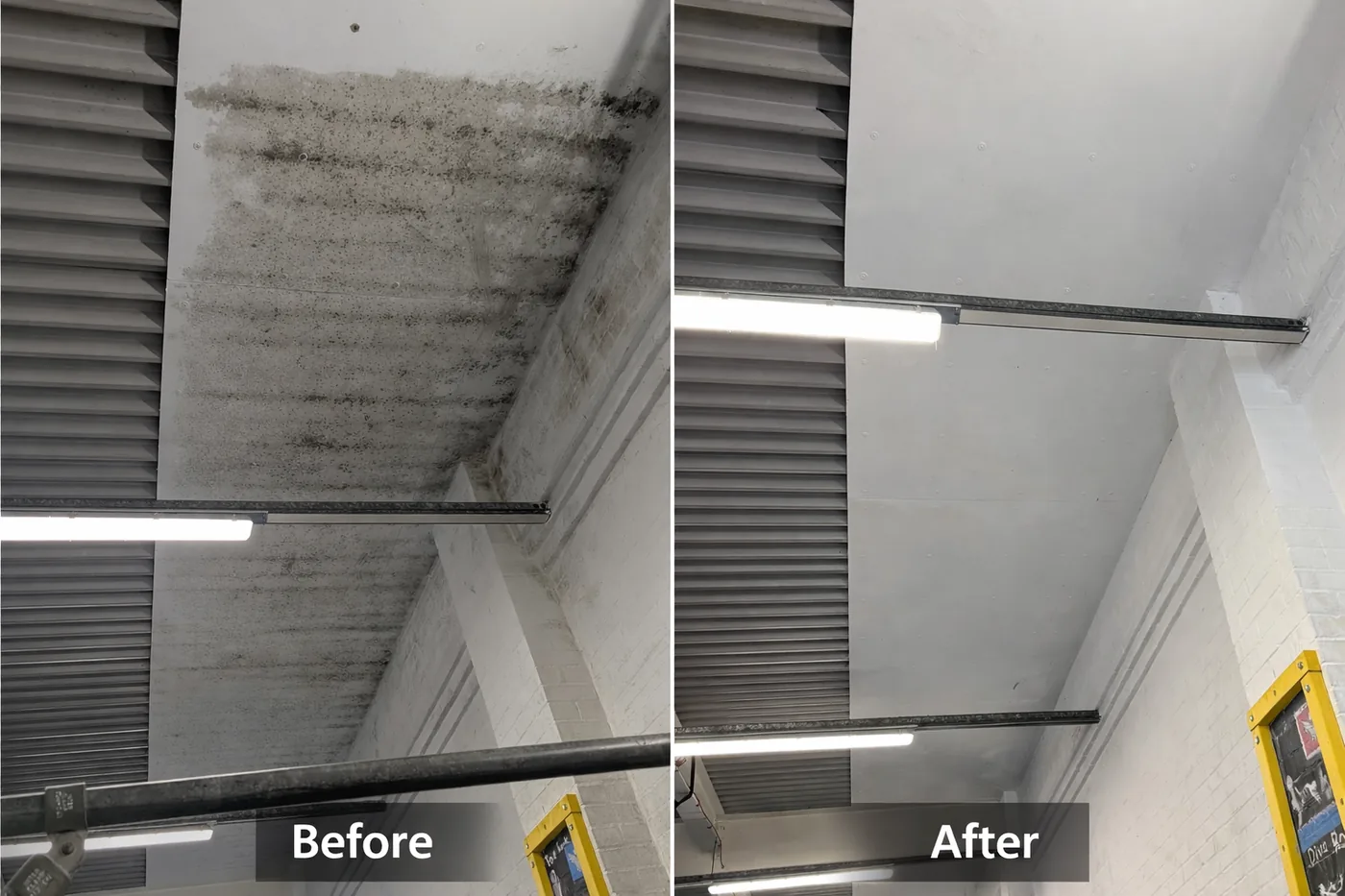
Cleaning is worth doing, but only as a first step. Wipe the growth away with a proprietary mould cleaner or a fungicidal wash, wearing gloves and a mask, and avoid dry brushing, which sends spores into the air. Do not paint over living growth: the pigment covers it for a few weeks and then it reappears through the paint. Once the surface is clean, the test of whether the underlying cause has been addressed is simple: if the growth returns in the same place within a season, the conditions have not changed, and the next step is measurement rather than another clean.
Limitations of general guidance
This article is general guidance. It cannot confirm the cause of dampness in a specific property. Recommendations should follow an inspection of the building, its external environment and its internal conditions.
Book an inspection