

What rising damp actually is
Rising damp is the upward movement of ground moisture through porous masonry by capillary action, where there is no effective barrier to stop it. It is real, we treat it, and in properties built before damp-proof courses became standard it is entirely plausible. What it is not is the default explanation for any damp near the bottom of a wall, which is how it is often used.
The signs usually put forward
A tide mark at roughly the same height along a wall; blown, soft or hollow-sounding plaster in the lowest 300mm to a metre; salting or white crystalline deposits; decoration that lifts or discolours at low level; skirting boards decaying from the back; a musty smell at floor level; and elevated moisture readings that reduce as the meter is moved up the wall. Taken together, and with other causes excluded, that pattern is consistent with capillary rise.
Why each sign has alternatives
Every one of those signs can be produced by something else. Rainwater splashing back off a raised patio wets the same band of wall. A path or border above the damp-proof course bridges it. Render carried down below ground level does the same. A leaking heating pipe under a floor produces low-level damp with salting. A cold, unheated, furniture-covered wall condenses at exactly the height a sofa sits against it. Old salt-contaminated plaster reads high on a meter whether or not the wall behind it is wet.
The distribution matters more than the reading
This is where a proper investigation earns its fee. Capillary rise produces moisture concentrated in the lowest part of the wall, reducing with height, with a reasonably consistent pattern along the affected length. A leak tends to be localised and can be higher than its source. Rainwater penetration follows the exposed elevation and reacts to weather. Condensation tracks the coldest surfaces and the humidity in the room. The shape of the moisture is the evidence; a single figure is not.
What a meter can and cannot tell you
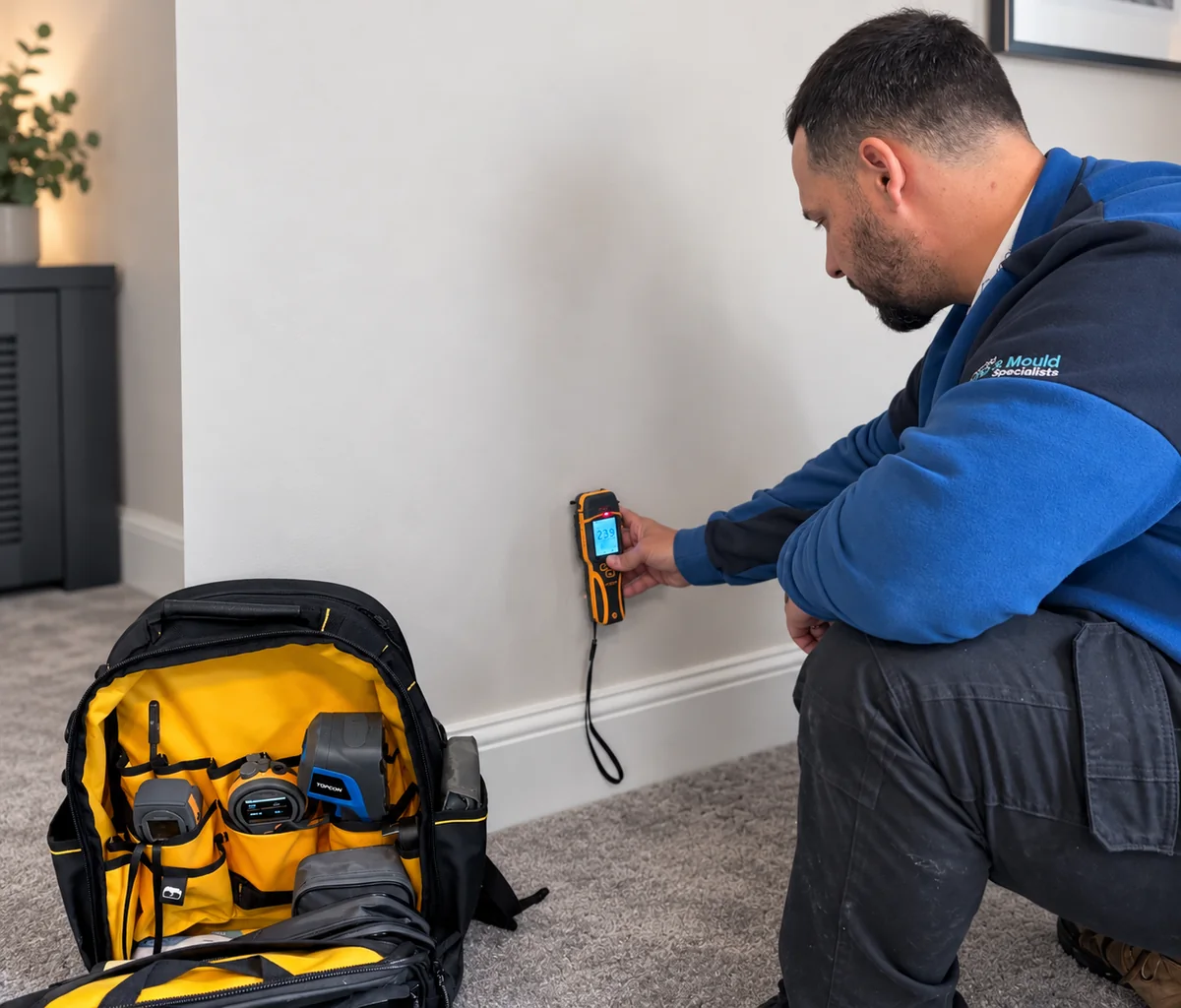
Electrical moisture meters measure conductivity, not water. Salts, foil-backed board, metal fixings and some paints all raise a reading on a dry wall. A high reading is a reason to investigate further — by profiling distribution, measuring the room, inspecting outside, and where the decision carries real cost, testing drilled samples for moisture content and salts. A reading alone does not diagnose rising damp, and no specification should be written from one.
What to do if you suspect it
Look outside first. Check the ground levels against the internal floor level, look for render or paving bridging the wall base, and watch what the gutters and downpipes do in heavy rain. Photograph the affected wall and note whether it changes with the weather or with the heating. Then have the property inspected properly: if capillary rise is confirmed, the remedy is straightforward, and if it is not, you will have avoided paying for work that was never going to help.
Limitations of general guidance
This article is general guidance. It cannot confirm the cause of dampness in a specific property. Recommendations should follow an inspection of the building, its external environment and its internal conditions.
Book an inspection