

Before anything starts
Remedial work should begin with a written specification you have read and agreed: which walls, to what height, what products, what is being removed, what is being reinstated and what is not. It should also state the sequence, because order matters. Correcting the moisture source comes first, then any drying period, then the internal work. If a quotation moves straight to injection and replastering without mentioning the gutter, the ground level or the leak that caused the problem, ask why. A programme that treats the symptom before the cause is the most common reason work has to be done twice.
Access, protection and services
Expect to clear the rooms concerned, or to agree who is moving what. Furniture needs to be out of the way, carpets lifted or protected, and curtains and blinds taken down where walls are being stripped. Our teams protect floors and door openings and use dust sheeting, but plaster removal is a dusty operation and some fine dust will travel, so it is sensible to close internal doors, remove soft furnishings from adjoining rooms and cover anything that cannot be moved. Electrical sockets and switches on affected walls will need isolating and may need temporarily removing; heating pipes, meters and alarm sensors should be pointed out before work starts.
What each stage looks and sounds like
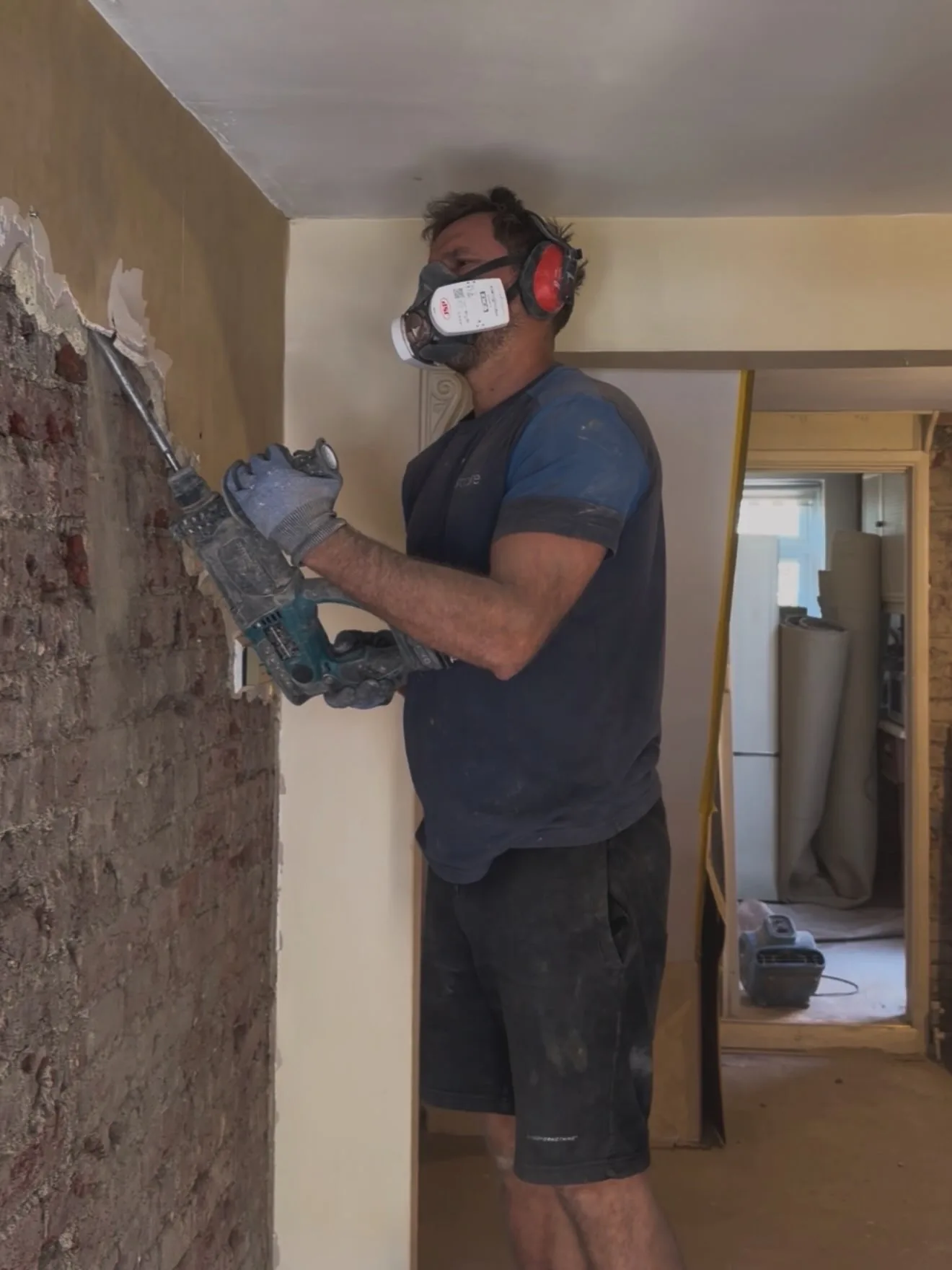
Removing plaster involves percussive tools and is the noisiest part of the job. Drilling for a chemical damp-proof course is comparatively quick and produces dust at low level. Injection itself is quiet. Timber repairs involve cutting and may need temporary support. Localised below-ground damp protection means preparing the affected area and applying the specified protection, which is largely confined to the wall or junction concerned. Render and plaster coats then follow with drying time between them. We will tell you which days are the noisy ones so you can plan around them.
Living in the property while work proceeds
Most damp proofing and timber work can be carried out with the household in place, room by room, provided access and storage can be arranged. Where a kitchen or bathroom is affected, or where a floor is being lifted, there may be a period without normal use of that room, and that should be identified in advance rather than discovered on the day. If anyone in the household has a respiratory condition, tell us before the start date so dust control can be planned more carefully and the sequence adjusted. Working hours, parking, skip or waste arrangements and key handling are all worth agreeing in writing beforehand.
Drying time is part of the job
Newly applied render and plaster need time before decoration, and the background masonry needs longer still. As a general guide, new plaster should not be decorated for several weeks, and a wall that was saturated may need months before a full decorative finish is appropriate. Where an earlier finish must be applied, a breathable mist coat is the usual approach, with full decoration later. We set out the drying guidance in writing at handover, because the most common cause of a successful repair looking like a failure is decoration applied too soon.
Reinstatement, snagging and what is excluded
Be clear about what the price includes. Replastering to an agreed height is usually included; skirtings, architraves, decoration, floor coverings, tiling and kitchen units are often quoted separately or excluded, and specialist decoration or matching an existing finish almost always is. At completion, walk the work with the team, list anything that needs attention and agree when it will be dealt with. You should receive documentation covering what was done, the products used, the guarantee where one applies, the maintenance the work requires, and drying and decoration guidance.
Guarantees and what they actually cover
A guarantee on a chemical damp-proof course normally covers the treated line for a stated period, and is conditional: it will not cover damp arising from a new bridge, a leak, condensation or a lack of maintenance. Cavity drain systems generally require periodic servicing of the pump, and a guarantee may be void without it. Insurance-backed guarantees add protection if the installer ceases trading, but only within their own terms. Read the document rather than the sales summary, keep it with the property papers, and note any servicing dates in a calendar, because the conditions are usually reasonable but they are conditions.
Programme and how long jobs typically take
Timescales vary with scope, but some rough expectations help with planning. Injecting a damp-proof course and replastering one or two walls in a single room is usually a two to four day operation, with drying time afterwards. A full ground floor of a terraced house is more often one to two weeks. Localised timber repairs take a day or two once access is open; a full floor replacement takes longer and needs the room emptied. Weather affects any external groundwork, and drying periods between render coats cannot be compressed without risking the finish. We would rather give you a realistic programme at the start than an optimistic one that slips.
Paying for the work
Expect a written quotation that separates the investigation fee, the remedial works and anything excluded, with VAT shown. For most domestic jobs we ask for a deposit on booking with the balance on completion; larger projects may be staged against agreed milestones. Variations should be agreed in writing before they are carried out, because the commonest cause of a disputed final account is work added verbally on site. Where an inspection fee is deductible from the works, as with our Damp Proofing Quote Assessment, that deduction is set out in the quotation so you can see it applied rather than taking it on trust.
Limitations of general guidance
This article is general guidance. It cannot confirm the cause of dampness in a specific property. Recommendations should follow an inspection of the building, its external environment and its internal conditions.
Book an inspection