
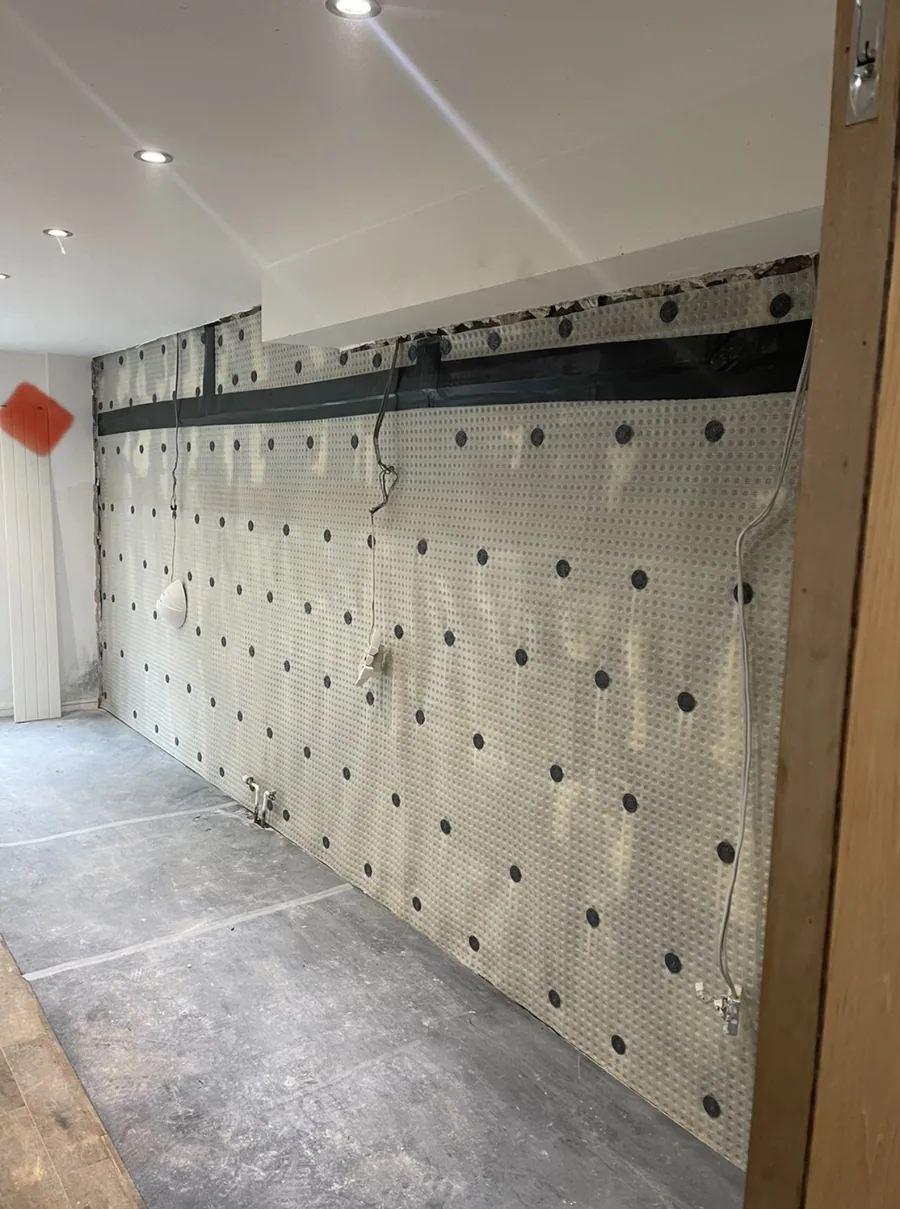
Below ground, water is the normal condition
A basement is surrounded by ground that holds water and moves it. Whether that water gets inside depends on the construction, the drainage, the detailing and the ground conditions — not on how old the building is. Most older basements were never built to keep water out entirely; they were built to be cellars, and used accordingly.
Groundwater under pressure
Where the water table sits above the floor level, or rises seasonally to do so, water is pressed against the walls and floor. The evidence is water appearing at low level and at the wall-to-floor junction, worse after prolonged wet weather rather than after a single downpour, and sometimes visibly running.
Surface water finding a route down
Far more common, and much cheaper to fix. Rainwater discharging at the base of the wall from a defective downpipe or blocked gully, paving falling towards the building, a blocked land drain, or a light well with no working outlet all deliver water directly to the outside face of a basement wall. Correcting that is external work, and it sometimes ends the problem entirely.
Leaking services
Old drain runs, water mains and heating pipework in or near the structure produce ingress that has nothing to do with rainfall. The clue is damp that does not respond to the weather at all, or that is worse during dry spells when a leak is the only source of water.
Condensation, which is not a leak
A cold, unheated basement with almost no air change will produce damp walls, musty air, wet floors and mould without a drop of groundwater entering. Warm, humid air from the house above meets cold basement surfaces and condenses. Waterproofing that space without addressing heating and air change will disappoint — which is why an assessment measures the environment as well as looking for ingress.
How the causes are separated
By pattern and by measurement: where the water appears, at what height, how it correlates with rainfall and season, the condition of external drainage and ground levels, moisture readings across the structure, and the internal temperature and humidity. Once the mechanism is known, the choice between external correction, barrier waterproofing, drained protection or simply heating and ventilating the space follows logically.
Limitations of general guidance
This article is general guidance. It cannot confirm the cause of dampness in a specific property. Recommendations should follow an inspection of the building, its external environment and its internal conditions.
Book an inspection