
Repairs & finishes
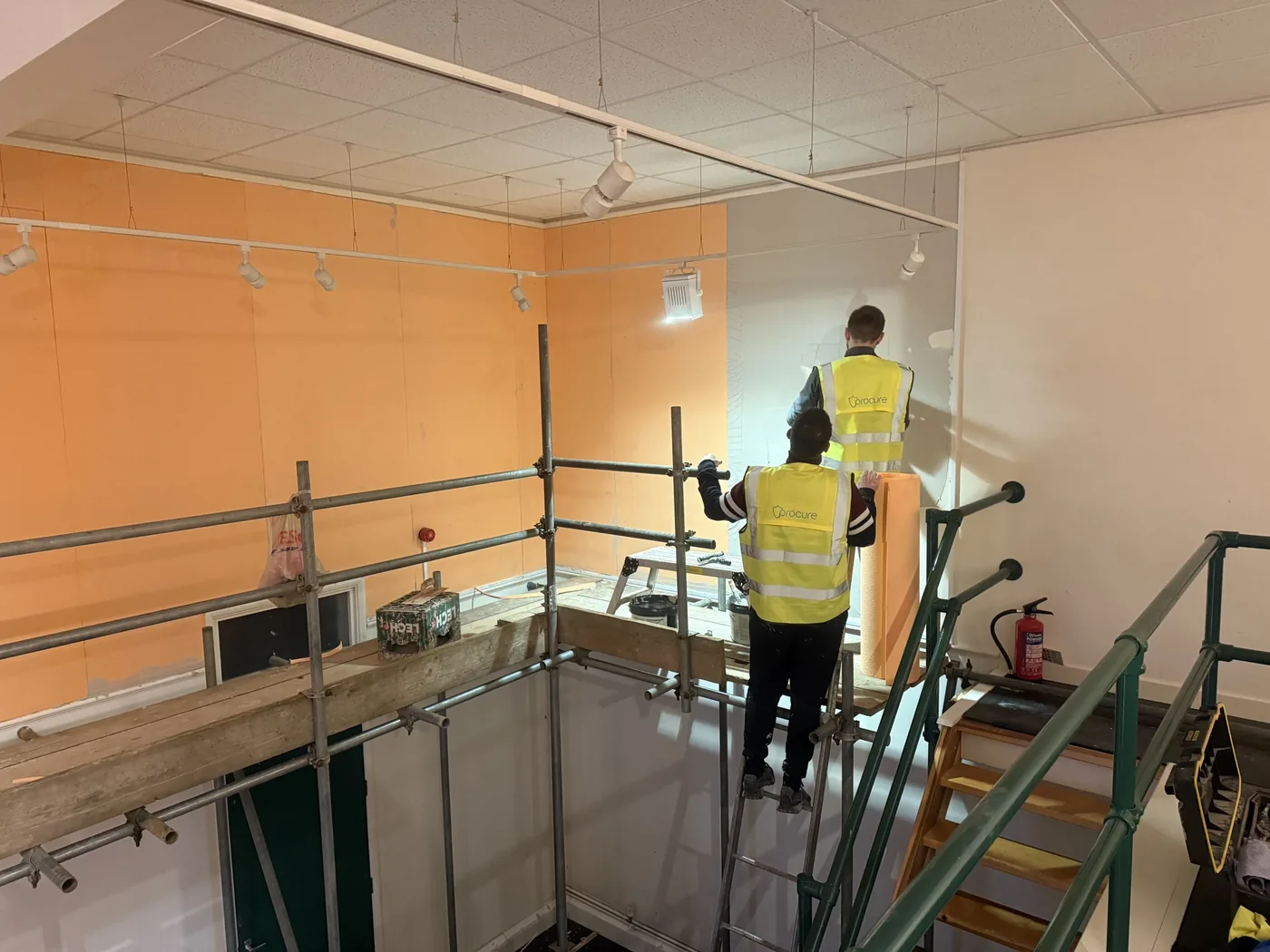
Internal wall insulation for cold solid walls
Insulation of solid walls with careful attention to moisture risk and detailing.
Accredited & certified
PCA Qualified Technician (PCAQT) — Damp & Timber
Our qualified technicians install damp proofing and timber preservation treatments with care and attention to detail.

CHAS Accredited Contractor
Assessed and accredited for health and safety management, so landlords, agents and homeowners can see our safe working practices have been independently checked.

UK Academy of Mould Experts Accredited
Corporate member of UKAME, working to recognised industry standards for the safe assessment and remediation of mould in domestic property.

Dewpoint Professional Certified
Certified in Advanced Mould Remediation, covering containment, safe removal and correcting the moisture conditions that allow mould to return.
Surface temperature is the point
Why a warmer wall surface changes everything
Condensation and the mould that follows it happen where a surface is cold enough to bring moist air to its dew point. On a solid brick wall in an ordinary heated room, the internal surface can sit several degrees below the room temperature — and behind a wardrobe on that wall, colder still.
Internal wall insulation raises that surface temperature. Done properly, it reduces heat loss, removes the cold surface that was condensing, and makes the room easier and cheaper to keep warm. Done as a cosmetic fix over a damp wall, it hides a defect and creates new cold spots at every junction it fails to address.
- Existing moisture mechanisms identified and resolved before insulating
- Wall construction and its moisture behaviour established
- Insulation type and thickness chosen for the wall, not by habit
- Continuity maintained at floor and ceiling junctions
- Window and door reveals and heads insulated to avoid new cold bridges
- Internal walls returned where they meet the insulated elevation
- Services, sockets and fixings planned so the layer is not punctured casually
- Air change and moisture production considered alongside the fabric
What the issue is
Internal wall insulation improves comfort and reduces cold surfaces, but it changes how a wall behaves. Moisture risk, junction detailing and ventilation must be considered together.
Common symptoms
- Cold walls and surface condensation
- Mould in corners and behind furniture
- High heating costs
- Cold bridging at reveals
Likely contributing factors
- Solid wall construction with no insulation
- Cold bridging at junctions
- Insufficient ventilation
- Existing penetrating damp
Conditions that may be mistaken for it
- Rising damp
- Penetrating damp through the wall
- Plumbing leaks
How the issue should be investigated
- Establish wall construction and condition
- Check for existing damp and its cause
- Record surface temperatures and humidity
- Assess ventilation provision
Potential treatment or repair options
- Insulated board or breathable insulation systems
- Careful detailing at reveals, junctions and floors
- Ventilation improvements alongside
- Making good and decoration
When treatment may not be appropriate
- Where the wall has unresolved penetrating damp
- Where ventilation cannot be improved to suit
Factors affecting the cost
- Wall area and system specification
- Removal and refitting of fixtures
- Detailing at reveals and junctions
- Decoration
What to expect during an inspection
A survey of wall construction, existing dampness and ventilation, with a discussion of suitable systems.
How we work
Assessment, then a specification that suits the wall
- 1
Measure the wall and the room
Surface temperatures, air temperature, relative humidity and dew point recorded, so the condensation risk is quantified rather than assumed, along with moisture readings in the wall itself.
- 2
Rule out fabric moisture
Rainwater penetration, bridging, rising damp and leaks investigated and corrected first. Insulation applied over a wet wall reduces its ability to dry and puts the problem out of sight.
- 3
Specify for the construction
Insulation type, thickness and finish chosen for the wall's construction and moisture behaviour, with traditionally built walls treated differently from modern cavity construction.
- 4
Detail the junctions
Reveals, heads, floor and ceiling junctions, party wall returns and service penetrations designed in, because these are where untreated cold bridging produces the next patch of mould.
- 5
Install and reinstate
Installation, making good, and advice on ventilation, heating and decoration once the work is complete.
Where the room's moisture load is high, insulation alone will not be enough — extract and air change form part of the recommendation.
Related work
Related work and reading
Condensation control
Humidity, dew point and surface temperatures measured before any equipment or insulation is recommended.
Mould remediation
Safe removal of the contamination, and control of the moisture conditions that allowed it to grow.
Damp surveys and moisture investigations
What a professional damp investigation covers, what the instruments can and cannot establish, and what your written report contains.
Penetrating damp investigations
Rainwater and external defects traced to the elevation, opening or rainwater fitting responsible.
Damp-resistant plastering
Reinstatement in the right materials once the cause has been dealt with and the wall has begun to dry.
How to reduce condensation
Practical steps that reduce condensation risk in an occupied home.
Where we work
Internal wall insulation across Bedfordshire, Northamptonshire and Cambridgeshire
Internal wall insulation is carried out across our operating area. Choose your county or town to see the work we do locally, the postcode districts we cover and how to arrange an inspection.
0% INTEREST. NO FEES.
Spread the cost of your remedial works.
Pay 40% upfront and spread the balance over three or six monthly instalments.
Available on eligible remedial works, subject to assessment and written agreement.
Frequently asked questions
Next step
Not sure which inspection you need? Start with a few questions.
Tell us what you are seeing and we will set out what is likely, what is uncertain and which inspection would answer the question. Speak to us on 0333 335 6152 if you would rather talk it through.