
Repairs & finishes
External repairs that stop damp at its source
Repairs to the external fabric that address the source of moisture entry.
Accredited & certified
PCA Qualified Technician (PCAQT) — Damp & Timber
Our qualified technicians install damp proofing and timber preservation treatments with care and attention to detail.

CHAS Accredited Contractor
Assessed and accredited for health and safety management, so landlords, agents and homeowners can see our safe working practices have been independently checked.

UK Academy of Mould Experts Accredited
Corporate member of UKAME, working to recognised industry standards for the safe assessment and remediation of mould in domestic property.

Dewpoint Professional Certified
Certified in Advanced Mould Remediation, covering containment, safe removal and correcting the moisture conditions that allow mould to return.
Outside in
Most internal damp starts with something outside
It is the least glamorous part of this trade and the most frequently skipped. Before anybody drills a wall, the fabric outside it should be inspected, because the following defects account for a very large share of the damp we are called to.
Blocked, split, sagging or undersized gutters
Leaking downpipe joints, missing shoes and discharge over the wall
Gullies that are blocked or discharging at the wall base
Eroded, cracked or cement-rich pointing
Cracked, hollow or debonded render
Render carried down below ground level
Spalled or porous brickwork and open perpends
Defective cills, missing drips and failed sealant to openings
Slipped tiles, defective verges and failed flashings
Cracked chimney flaunching and defective stacks
Raised patios, paths and borders above the damp-proof course
Ground that falls towards the building rather than away from it
This is why our inspections always include the outside of the building, at height where it can be seen safely, and why our reports name the defect and its position rather than saying "maintenance required".
What the issue is
Many internal damp problems are resolved by repairing external defects such as rainwater goods, pointing, render, sills and ground levels.
Common symptoms
- Damp appearing after rainfall
- Staining on external walls
- Overflowing gutters
- Cracked render or missing pointing
- Ground levels above internal floor level
Likely contributing factors
- Blocked or defective gutters and downpipes
- Failed pointing or render
- Defective sills and seals
- Raised paving or soil against walls
Conditions that may be mistaken for it
- Condensation misread as penetrating damp
- Internal plumbing leaks
How the issue should be investigated
- External elevation inspection
- Assessment of rainwater goods and ground levels
- Correlating internal damp with external features
- Photographic recording of defects
Potential treatment or repair options
- Gutter and downpipe repair or replacement
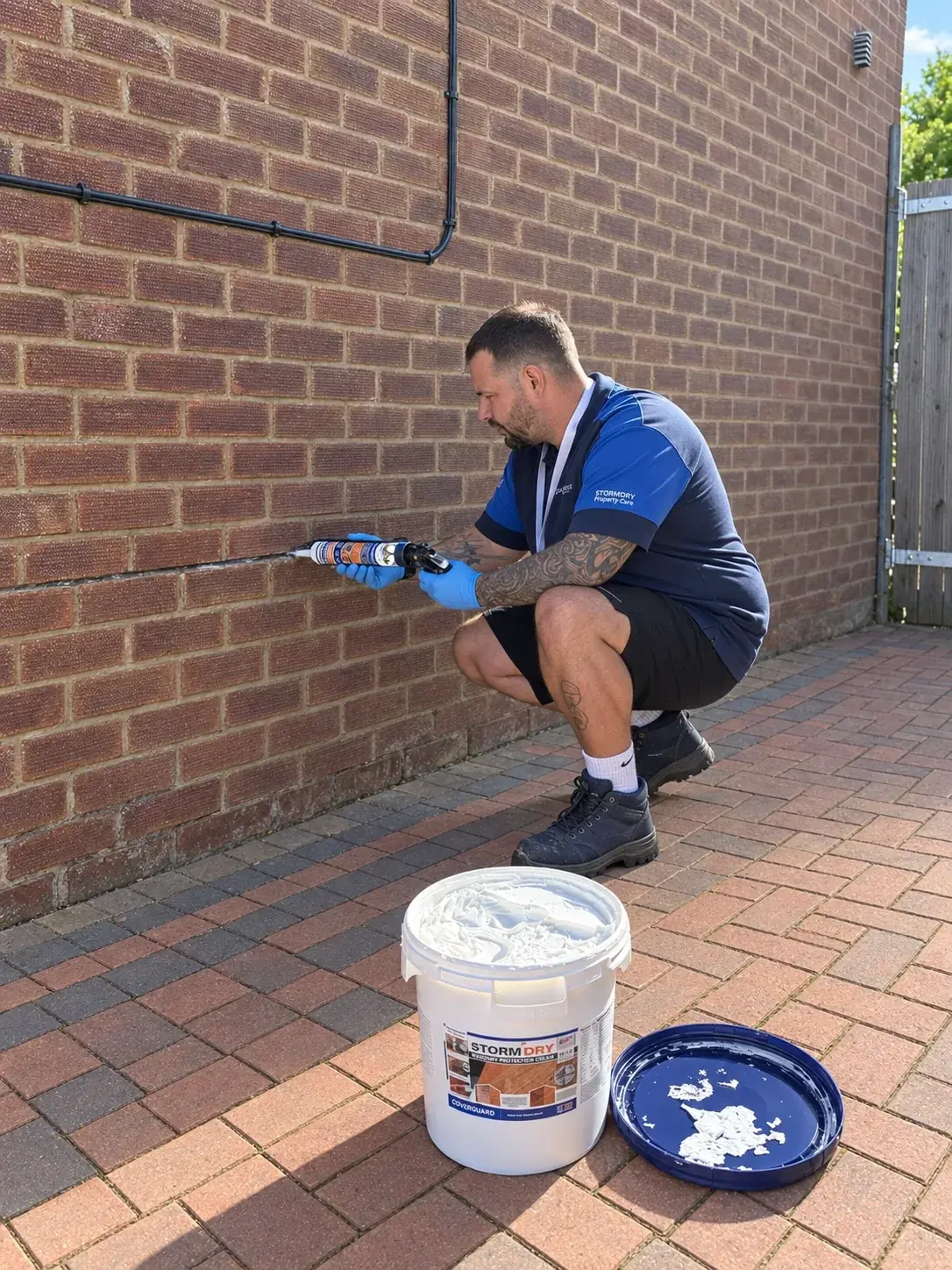
- Repointing and render repairs
- Sill and seal repairs
- Lowering ground levels and improving drainage
- Applying suitable protective treatments where justified
When treatment may not be appropriate
- Where the defect is cosmetic and not causing damp
- Where internal work is proposed instead of fixing the source
Factors affecting the cost
- Access requirements and working height
- Extent and type of repair
- Matching existing materials
- Waste removal
What to expect during an inspection
An external inspection with photographs, correlated with internal damp locations.
Related work
Related work and reading
Penetrating damp investigations
Rainwater and external defects traced to the elevation, opening or rainwater fitting responsible.
Damp surveys and moisture investigations
What a professional damp investigation covers, what the instruments can and cannot establish, and what your written report contains.
Damp proofing
Why damp proofing is not one treatment, and how the right remedial specification follows the diagnosis.
Rising damp assessments
Capillary moisture, damp-proof courses, bridging and salt contamination assessed on the evidence rather than a meter reading.
How defective gutters affect walls
What a defective gutter does to the wall behind it, month after month.
How high external ground levels can contribute to damp
Why raised paving and borders bridge a damp-proof course.
Where we work
External damp repairs across Bedfordshire, Northamptonshire and Cambridgeshire
External damp repairs is carried out across our operating area. Choose your county or town to see the work we do locally, the postcode districts we cover and how to arrange an inspection.
0% INTEREST. NO FEES.
Spread the cost of your remedial works.
Pay 40% upfront and spread the balance over three or six monthly instalments.
Available on eligible remedial works, subject to assessment and written agreement.
Frequently asked questions
Next step
Not sure which inspection you need? Start with a few questions.
Tell us what you are seeing and we will set out what is likely, what is uncertain and which inspection would answer the question. Speak to us on 0333 335 6152 if you would rather talk it through.