
Timber
Woodworm and wood-boring insect investigation
Establishing whether insect activity is current before recommending any treatment.
Accredited & certified
PCA Qualified Technician (PCAQT) — Damp & Timber
Our qualified technicians install damp proofing and timber preservation treatments with care and attention to detail.

CHAS Accredited Contractor
Assessed and accredited for health and safety management, so landlords, agents and homeowners can see our safe working practices have been independently checked.

UK Academy of Mould Experts Accredited
Corporate member of UKAME, working to recognised industry standards for the safe assessment and remediation of mould in domestic property.

Dewpoint Professional Certified
Certified in Advanced Mould Remediation, covering containment, safe removal and correcting the moisture conditions that allow mould to return.
What we look for
"Woodworm" describes several insects, not one
Woodworm is a catch-all term for the larval stage of wood-boring beetles. The damage is done by larvae tunnelling inside the timber; the holes you can see are where the adults emerged. Different species have different significance, and damp timber is far more attractive to most of them than dry timber.
What the inspection records:
Size, shape and edge condition of exit holes
Presence, colour and texture of frass, and whether it is loose
Live or recently dead adult beetles, and the time of year
Timber species, sapwood content and position in the building
Moisture content of the affected timber
Whether any fungal decay is present alongside the insect damage
Structural significance of the timbers involved
Evidence of previous treatment
In many properties the honest answer is that the damage is historic, the timber is dry, and no treatment is needed — a finding we are happy to put in writing.
What the issue is
Woodworm is a general term for wood-boring beetle activity. Treatment is only appropriate where the attack is active and the species and moisture conditions justify it.
Common symptoms
- Small round exit holes
- Fine powdery frass
- Beetles seen in summer months
- Weakened or crumbling timber edges
Likely contributing factors
- Elevated timber moisture content
- Poorly ventilated voids and lofts
- Damp or sapwood-rich timbers
Conditions that may be mistaken for it
- Historic inactive attack
- Mechanical damage or old nail holes
- Surface abrasion
How the issue should be investigated
- Examine holes, frass and timber condition
- Assess whether activity appears current
- Record timber moisture content
- Identify the species where possible
Potential treatment or repair options
- Reducing timber moisture content
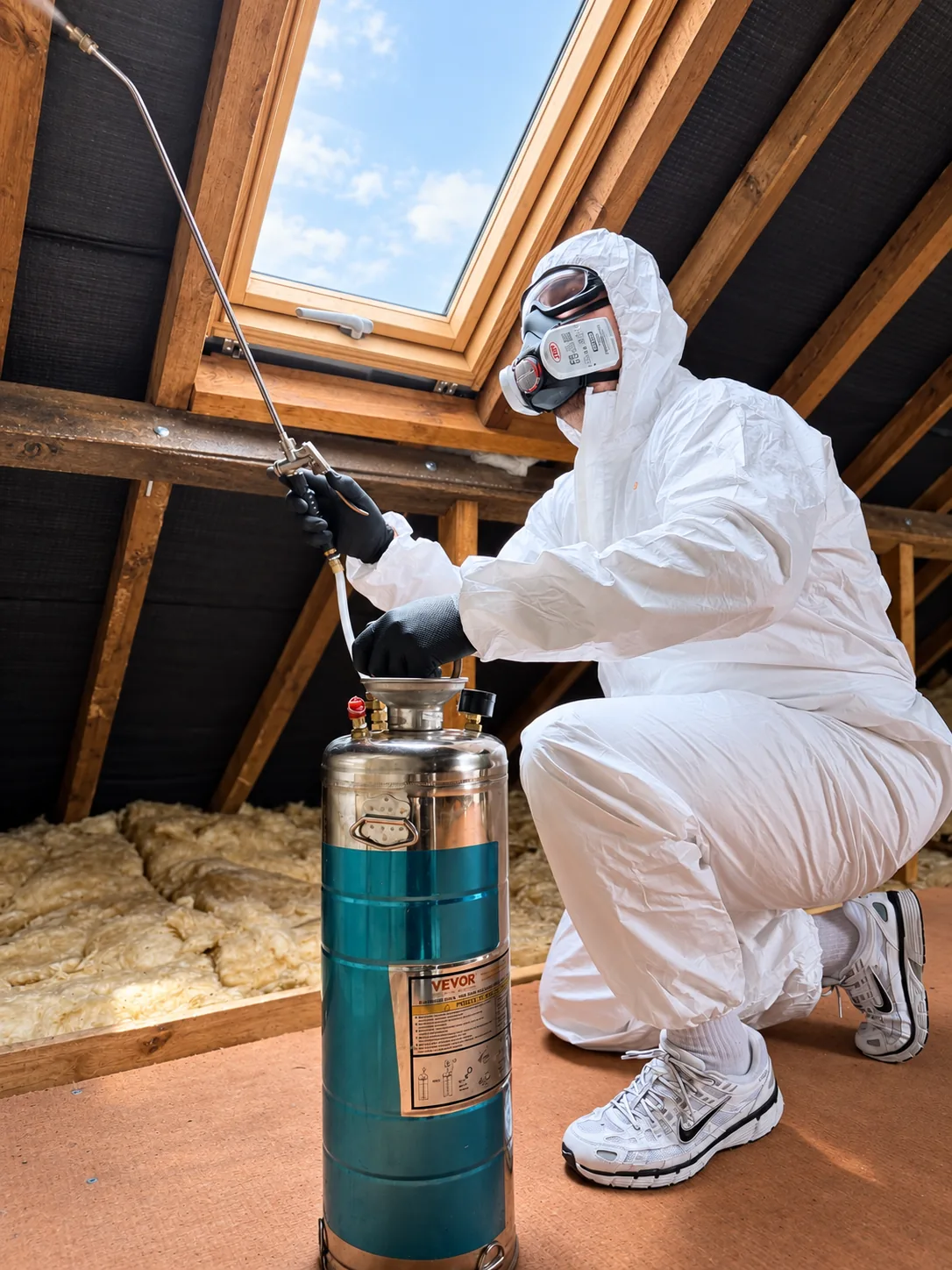
- Targeted insecticidal treatment where activity is confirmed
- Replacement of structurally weakened timber
- Improved ventilation
When treatment may not be appropriate
- Where the attack is clearly historic
- Where reducing moisture will resolve the risk
Factors affecting the cost
- Area of timber to be treated
- Access, including lifting floors
- Any structural repairs
- Occupancy arrangements during treatment
What to expect during an inspection
The surveyor will inspect accessible timbers, look for signs of current activity and record moisture readings.
The distinction that decides the cost
Active infestation against historic damage
Suggests historic damage
Signs that the activity has finished.
- Holes darkened, dusty or painted over
- No loose frass, or frass that is compacted and grey
- No beetles found, in or out of season
- Timber dry and in a heated, ventilated position
- Evidence of previous treatment on record
- Damage confined to sapwood, with no recent progression
Suggests active infestation
Signs that justify treatment.
- Fresh, clean-edged, pale-rimmed exit holes
- Loose, gritty frass of the colour of the timber
- Live or recently dead adults, typically in late spring and summer
- Timber damp, or in an unheated, poorly ventilated void
- Progression since a previous inspection or photographs
- Bore dust appearing on surfaces below the timber
Where activity is confirmed, treatment is specified for the timbers involved, alongside correcting the dampness that made them attractive. Where it is not, we say so.
Related work
Related timber work and reading
Timber preservation
Decay and insect activity assessed against the moisture conditions that made the timber vulnerable.
Dry rot investigations
Serpula lacrymans identified, its extent established and the moisture source it depends on removed.
Wet rot investigation and repairs
Moisture-driven decay in joinery and structural timber, repaired once the water has been stopped.
Damp surveys and moisture investigations
What a professional damp investigation covers, what the instruments can and cannot establish, and what your written report contains.
Identifying possible woodworm activity
The signs that separate live infestation from old, finished damage.
Why air bricks and subfloor airflow matter
Damp, still subfloor voids are where infestation and decay begin.
Where we work
Woodworm investigation across Bedfordshire, Northamptonshire and Cambridgeshire
Woodworm investigation is carried out across our operating area. Choose your county or town to see the work we do locally, the postcode districts we cover and how to arrange an inspection.
0% INTEREST. NO FEES.
Spread the cost of your remedial works.
Pay 40% upfront and spread the balance over three or six monthly instalments.
Available on eligible remedial works, subject to assessment and written agreement.
Frequently asked questions
Next step
Not sure which inspection you need? Start with a few questions.
Tell us what you are seeing and we will set out what is likely, what is uncertain and which inspection would answer the question. Speak to us on 0333 335 6152 if you would rather talk it through.