
Art gallery · St Albans
ISO-Therm internal wall insulation to an art gallery
- Agreed approach
- ISO-Therm internal wall insulation installed throughout the gallery, fitted from scaffold and finished ready for decoration.
If you own, let or manage a property in Northstowe and you have noticed damp patches, mould growth, a persistent musty smell or softening timber, a thorough inspection is the right starting point. Procure Group Ltd works across Cambridgeshire carrying out damp investigations, condensation and mould assessments, timber decay and woodworm inspections, and below-ground damp protection, as well as masonry, plaster and reinstatement works. We do not assume a cause before we have looked properly; what we find on site shapes everything that follows.



What we investigate
Any one of these symptoms can have several different causes, and the right remedy depends entirely on which one it is. That is what a survey establishes.
Staining at low level or around a specific point on a wall or ceiling.
Black, green or grey growth on walls, ceilings, sealant, window reveals or behind furniture.
A persistent smell, often in a cupboard, wardrobe or unused room, sometimes before anything is visible.
Blistering, salting, crumbling plaster or wallpaper lifting away from the wall.
Water on glass and frames in the morning, and mould appearing on cold surfaces.
Damp appearing during or after rain, frequently linked to rainwater goods or pointing.
Low-level dampness that may be rising damp, or may be one of several other causes.
Soft or crumbling timber, fungal growth, exit holes or springy floors.
Plumbing, heating or drainage leaks that show up some distance from the source.
Rooms that feel humid, cold spots at reveals and lintels, and extract fans that do not clear steam.
Damp, salting or water ingress at or just below external ground level.
What we are asked for
Each of these is a different problem with a different remedy. Which one applies depends on what the readings and the building show.
An evidence-led investigation of what is making the wall wet, with readings and findings you can act on.
Where a damp-proof course has genuinely failed, the appropriate remedial specification for the wall in question.
Professional remediation of the contamination, and control of the moisture conditions behind it.
Humidity, ventilation and surface temperature measured before any equipment is recommended.
Damp at or just below external ground level investigated, with localised protection where remediation calls for it. We do not install basement or cellar waterproofing.
Services
Each service below links to the full national service page, where the investigation, the treatment options and the circumstances in which it is not appropriate are set out in detail.
Damp
A structured investigation to establish the likely cause of dampness before any remedial work is recommended.
Damp
Careful assessment of low-level dampness, which is frequently caused by something other than rising damp.
Damp
Investigation of moisture entering through walls, roofs, openings and rainwater goods.
Surveys
Mould & condensation
Assessment of moisture production, ventilation, heating and insulation to reduce surface condensation.
Mould & condensation
Treating the mould is only part of the solution. We investigate why it developed in the first place, then remediate the contamination and control the conditions that caused it.
Timber
Assessment and treatment of structural timbers affected by moisture, decay or insect attack.
Timber
Establishing whether insect activity is current before recommending any treatment.
Timber
Identifying and repairing timber decay caused by sustained high moisture content.
Timber
Careful investigation of suspected dry rot, which can extend beyond visibly damp timber.
Repairs & finishes
Replastering specifications appropriate to walls affected by dampness or salt contamination.
Repairs & finishes
Repairs to the external fabric that address the source of moisture entry.
Repairs & finishes
Drying, repair and reinstatement following leaks, escapes of water or flooding.
Repairs & finishes
Insulation of solid walls with careful attention to moisture risk and detailing.
Our work
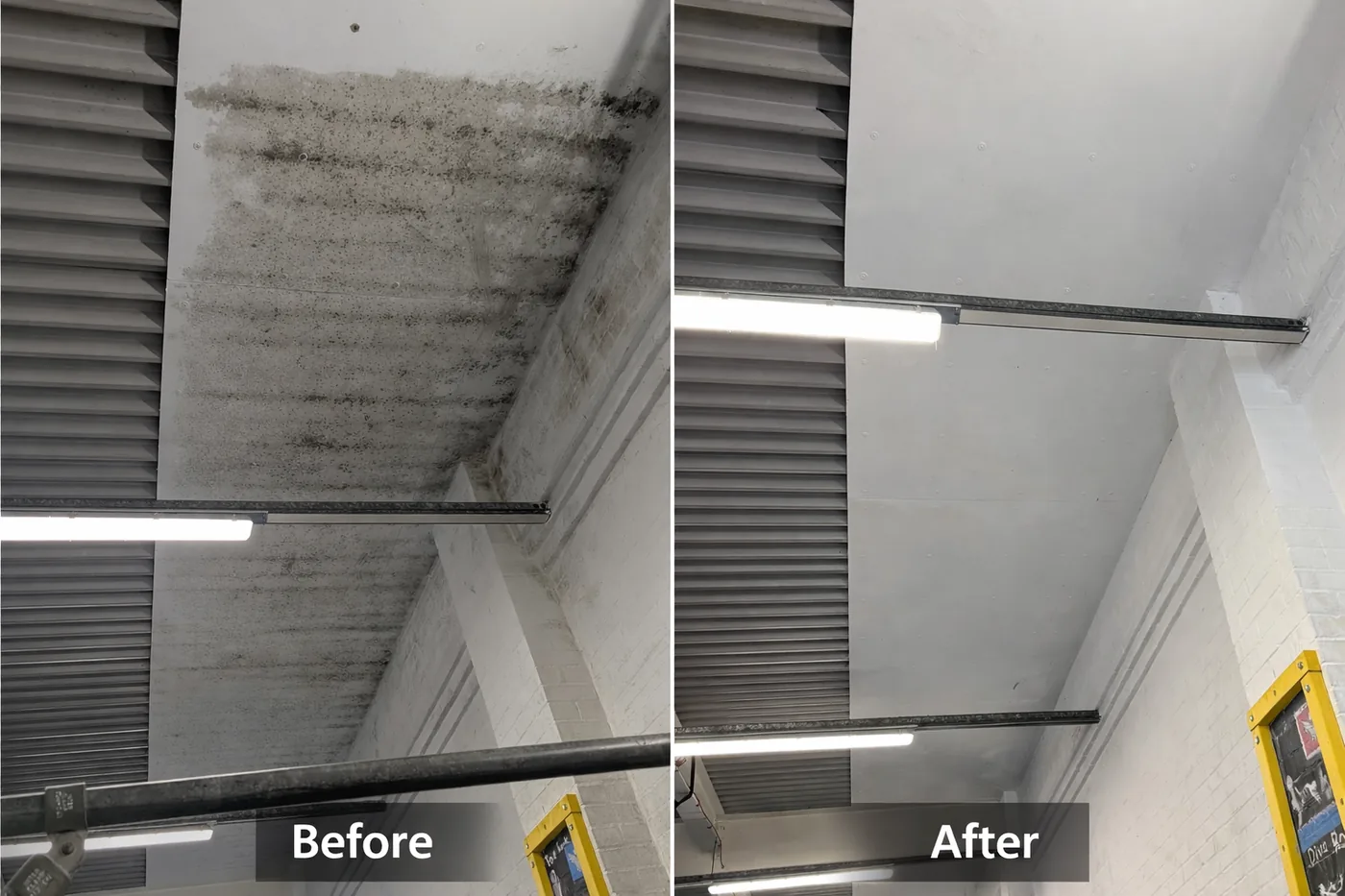
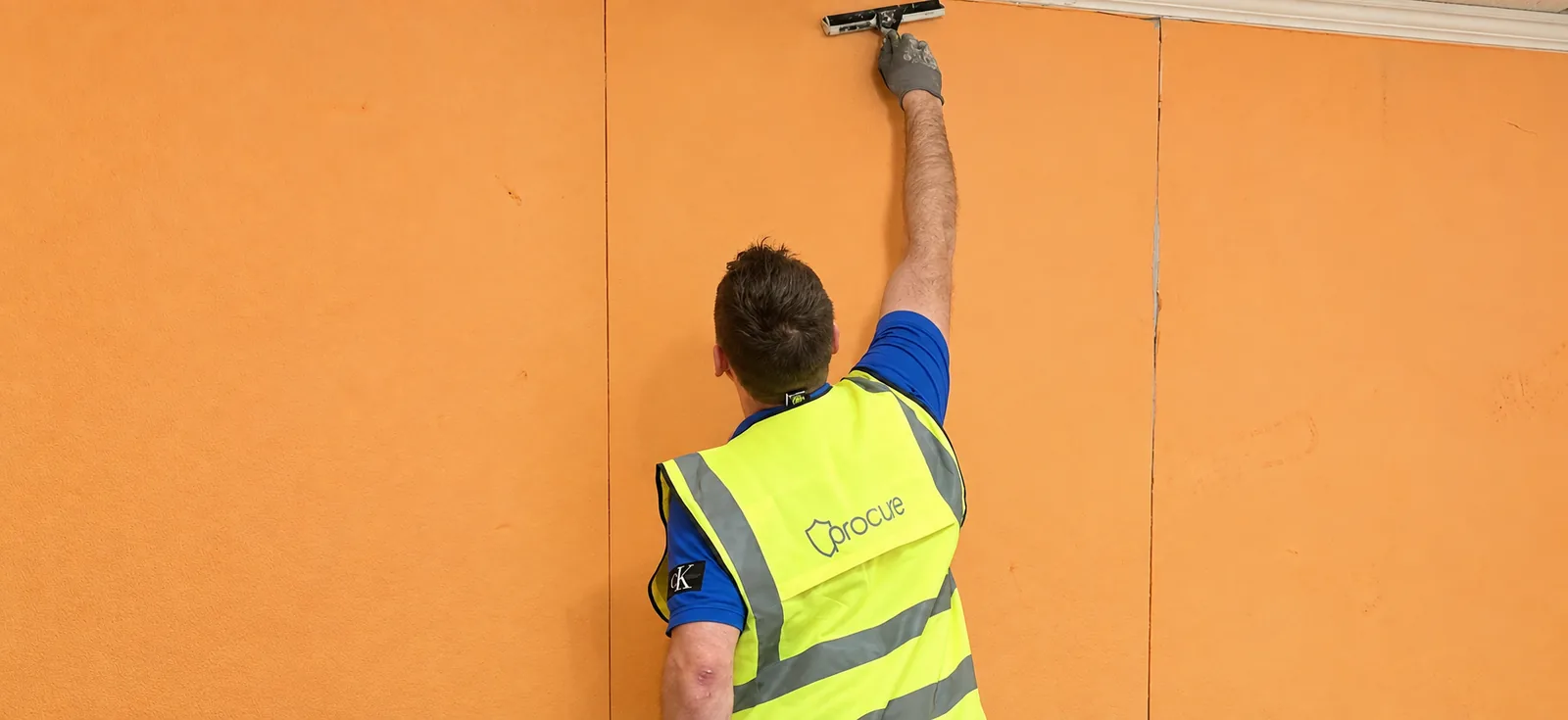
Photographs from Procure Group projects. Work of this kind is carried out across the area, so none is presented as a property at a particular address unless the caption says so.

Local property context
Different construction types behave differently when they get wet, so the approach is matched to the building in front of us.
Northstowe is a planned new settlement in Cambridgeshire, positioned to the north-west of Cambridge and not far from St Ives, built largely on low-lying ground in the CB24 postcode district. Because the town is still growing, its housing stock is almost entirely made up of new-build construction completed from the 2010s onward. The dwellings are predominantly cavity-wall or timber-frame in construction, finished to modern building regulations, with high levels of insulation, sealed double or triple glazing, and mechanical airflow systems where current standards require them. That combination creates a specific set of moisture risks that are worth understanding before assuming any property is free from damp problems simply because it is recently built.
In tightly sealed new-build homes, condensation is the most common moisture mechanism reported, and Northstowe properties are no exception. When occupants heat rooms intermittently, dry laundry indoors, or find that whole-house airflow units are blocked, poorly commissioned or simply switched off, indoor humidity rises and water vapour condenses on cooler surfaces. Window reveals, external corners of bedrooms, and the backs of wardrobes placed against external walls are frequent sites. Over time this produces mould colonies that can spread across plaster and into the fabric of the wall. An assessment establishes whether the cause is purely condensation, whether it is linked to a thermal bridge in the construction, or whether something else is contributing.
Timber-frame construction, which is widely used across modern housing developments, carries its own moisture considerations. If the external envelope is breached, whether through failed render, damaged cladding, poorly sealed window or door junctions, or defective roof detailing, water can reach the structural timber frame before it becomes visible inside the property. Prolonged wetting of structural timber leads to fungal decay, and in some circumstances dry rot can establish itself and spread to adjacent joinery or floor structures. A timber inspection examines moisture content, probes for areas of softening, and identifies whether any decay is active. The extent of any remedial work depends entirely on what is found.
Although rising damp through a failed damp-proof course is more commonly associated with Victorian or Edwardian solid-wall properties, some situations in newer builds can mimic its presentation. Ground levels raised during landscaping after construction, render that bridges the cavity at low level, or a mortar bed laid against a wall below the DPC line can all allow moisture to track upward into the wall. An inspection confirms which mechanism is present and what form of remediation is appropriate.
Our approach
The purpose of a survey is to identify the underlying cause of the moisture, not to justify a particular treatment.
Transparent pricing
A Damp Proofing Quote Assessment is £114 plus VAT. The fee can be deducted from the final invoice if eligible remedial works proceed, subject to the agreed terms. Other inspection types are priced according to their scope.
Inspection requirements vary between properties, so larger, more complex or commercial buildings are priced according to their scope. You will be told the fee before the visit is confirmed — there are no charges added afterwards.
Online tools
Answer a few simple questions, upload photographs and receive an initial summary of possible causes and the type of survey that may be appropriate.
Upload an existing damp report, building survey, RICS report or property inspection document for an initial AI-assisted summary and recommended next steps.
Send us the details and photographs of the problem and our team will price the work and put it in writing.
Regional project example
We do not have a published project in Northstowe yet, so this example is from elsewhere in the area we cover. We will not present work as local when it is not.
Art gallery · St Albans
Verified customer reviews
These reviews are from customers elsewhere in the region rather than this town. We publish them as they were given.
Questions
A damp survey involves a thorough visual examination of the property, moisture readings taken across walls, floors and ceilings using calibrated meters, and an assessment of airflow, drainage and any construction detailing relevant to the symptoms reported. We look at the full picture before drawing any conclusions. A written report sets out what was found, what is causing it, and what remedial options exist. No work is recommended unless the investigation supports the need for it.
Yes, though the mechanisms differ from older housing. Modern sealed construction reduces natural airflow, which raises the risk of condensation and mould if mechanical airflow is inadequate or not maintained. Timber-frame structures are also vulnerable to moisture ingress if the external envelope develops any defects. Problems can emerge within a few years of occupation, particularly after the building dries out following construction and occupants settle into normal patterns of heating and daily use.
The pattern, location and behaviour of mould growth can point toward one cause or another, but a proper diagnosis requires direct investigation rather than guesswork. Condensation mould tends to appear on cold surfaces in poorly aired spaces, whereas moisture penetrating through a wall or roof defect tends to follow the path of water ingress. We carry out a full assessment that considers both possibilities and checks for underlying construction issues before reaching a conclusion.
Yes. We cover Northstowe and the wider CB24 area for timber inspections, including assessments for wood-boring insect activity and for fungal decay such as wet rot or dry rot. In newer properties we focus particularly on structural timber within the frame, roof structure, ground floor joinery and any areas where moisture readings are elevated. Where decay is identified we set out what needs to be treated or replaced and what surface or structural reinstatement is required afterwards.
It depends on the specific property. Low-lying ground can hold moisture after sustained rainfall, and hydrostatic pressure can force water through floor slabs or wall bases over time.
Related reading
Written by our surveyors, on the questions we are asked most often.
Nearby
We also work in Cambridge, St Ives, Ely, Godmanchester, Soham and Huntingdon. For everywhere else we cover, see our Cambridgeshire service area.
Written and last reviewed by the Procure Group survey team on .
Next step
Book an inspection, ask for a callback, or use one of the online tools first. Whichever suits you — there is no obligation either way.
Tell us what you are seeing and we will come back to you. Your enquiry is tagged to Northstowe so the right surveyor picks it up.
Your cookie choices
We use essential cookies to make this website work. With your permission we also use Google Ads cookies to measure how many people book an inspection after seeing one of our adverts. We do not use cookies to profile you or sell your details, and you can change your mind at any time. Cookie Policy · Privacy Policy